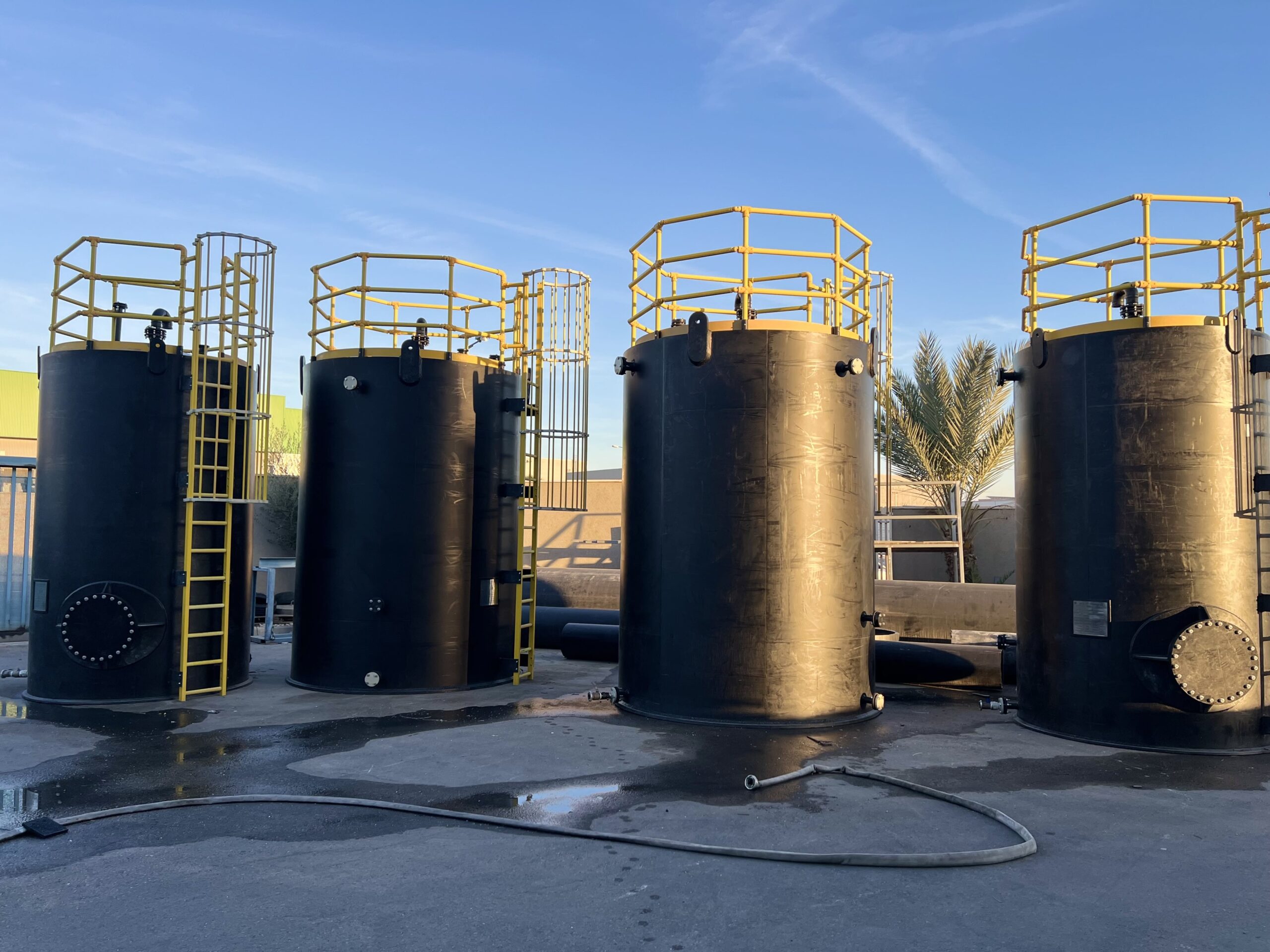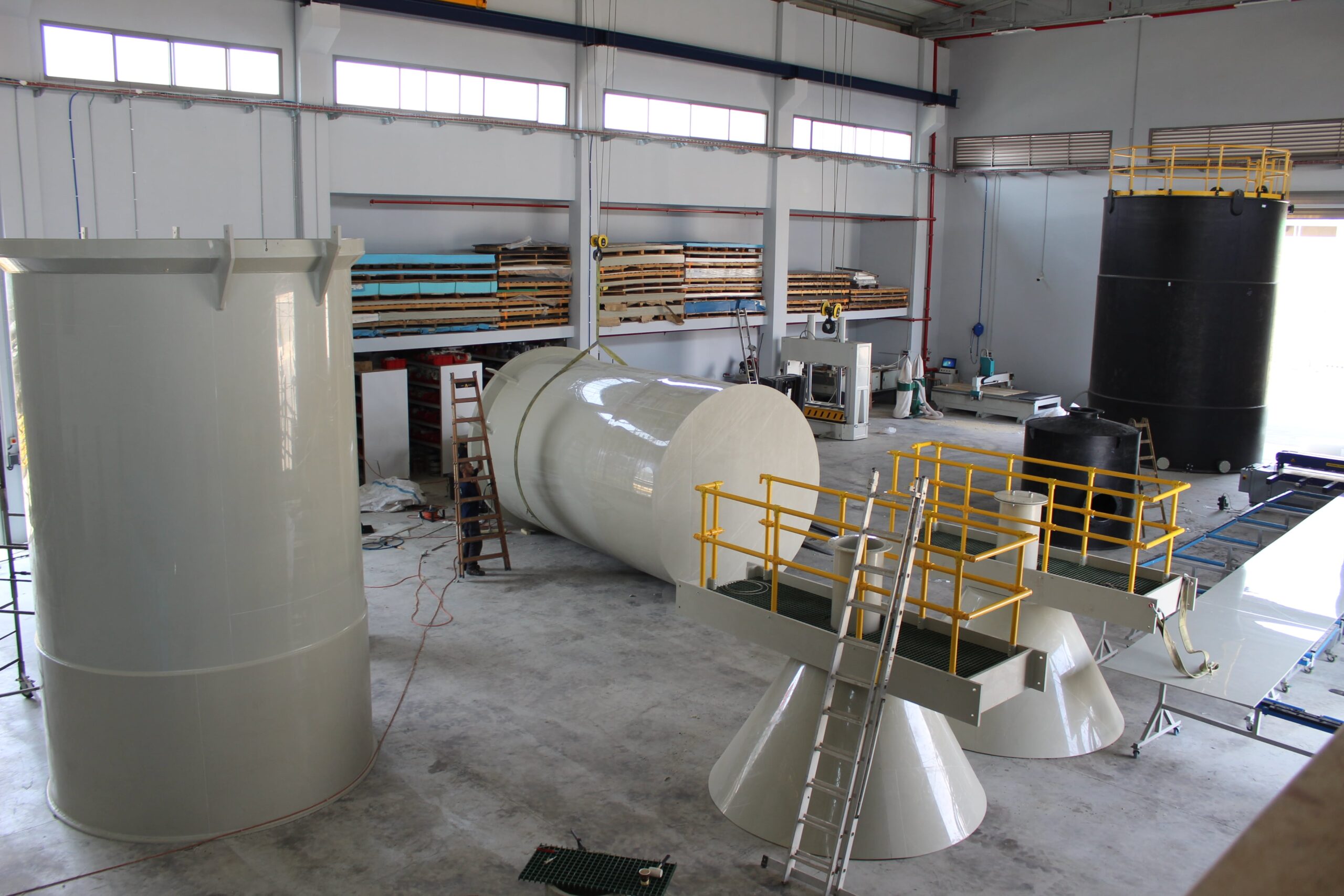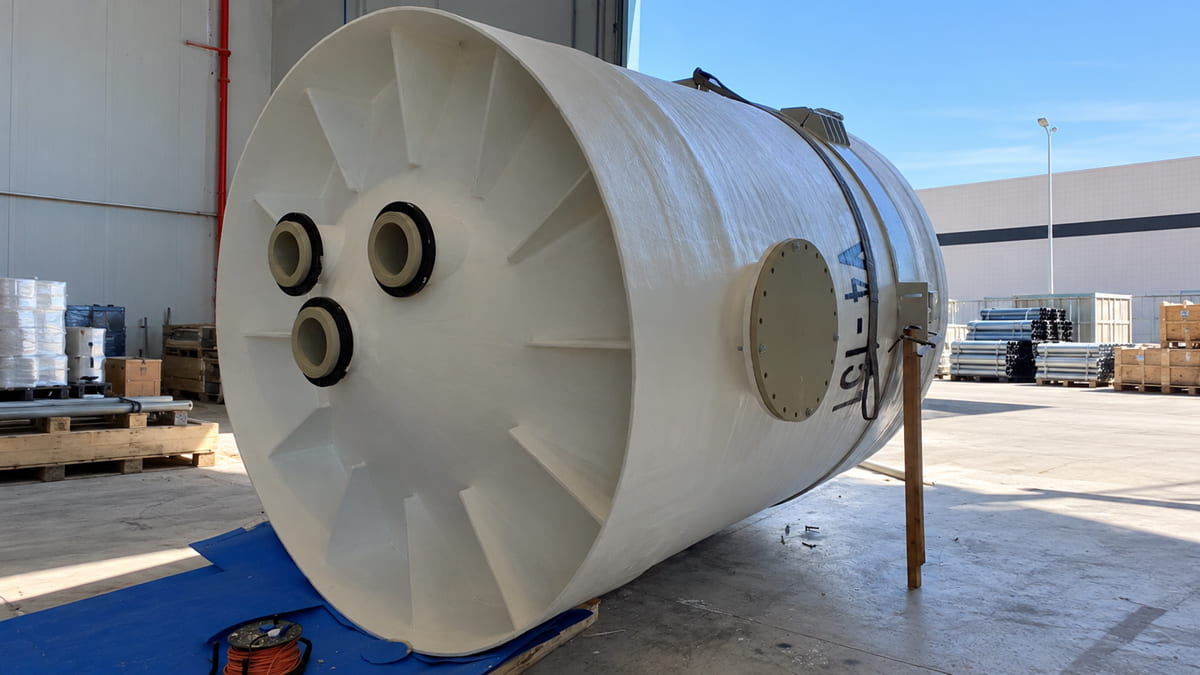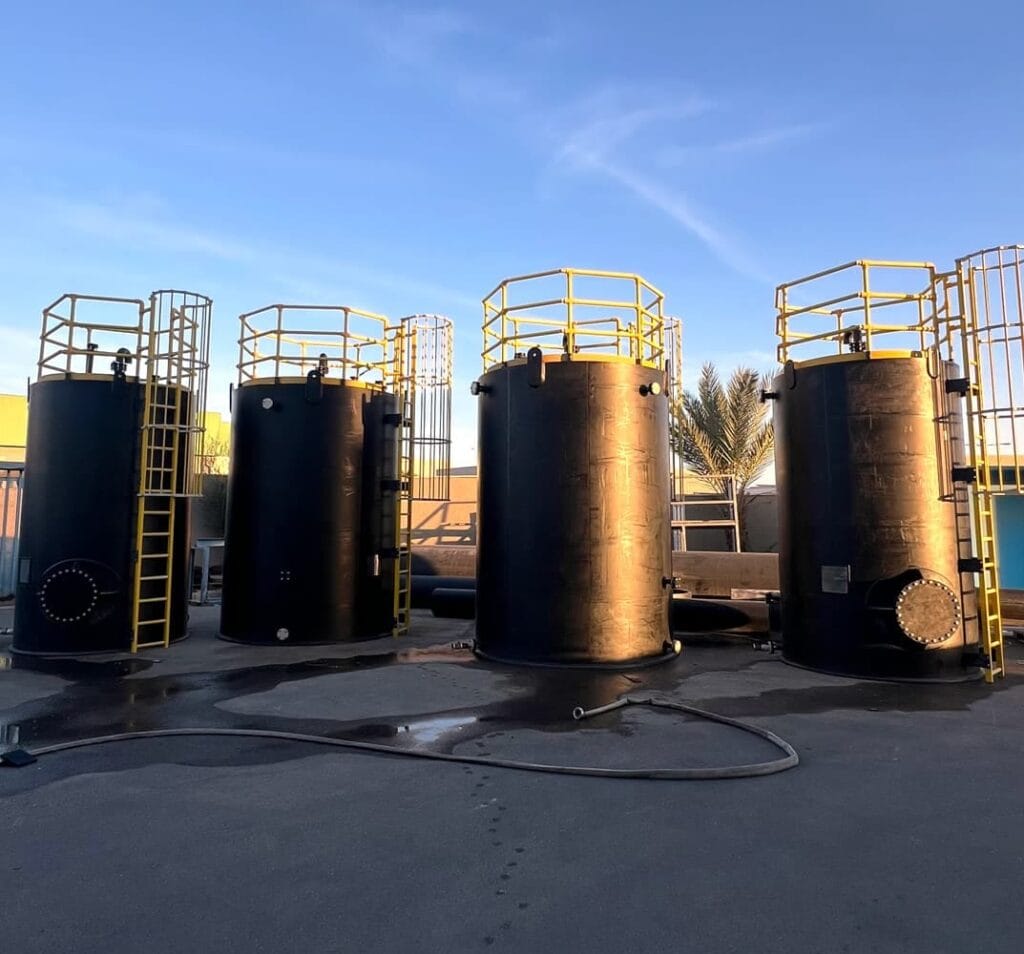




In the industrial world, a storage tank with a volume of 50, 100, or 200 m³ is not just a "large box." It is a critical infrastructure. Failure in such a tank can lead to plant shutdown and an environmental ecological disaster.
For plant engineers and infrastructure managers, the need in most cases goes far beyond a single storage tank; it is a need for a reliable system that will function in a demanding chemical, thermal, and mechanical environment for decades. At Plast-Hen, we approach the design of large plastic tanks with a holistic view: The tank is indeed the central component, but its success depends on full and smart integration with all the surrounding systems - the piping, the containment bund, and the control accessories.
The Volume Challenge: The Unique Engineering Complexity of Giant Tanks
When planning to manufacture a giant plastic tank, the hydrostatic pressure is at its peak at the tank's lowest point. Any tiny deviation in wall thickness or welding quality will lead to "Creep" - a slow plastic deformation that ends in catastrophic failure.
The Execution Process: From Graduated Design to Reinforced CNC Welding
At Plast-Hen, the response to the pressure challenge begins at the engineering design stage. We perform an analysis of the hydrostatic load at every height of the tank and determine the required wall thickness in a graduated manner (Graduated Wall) - thicker at the bottom and thinner at the top part.
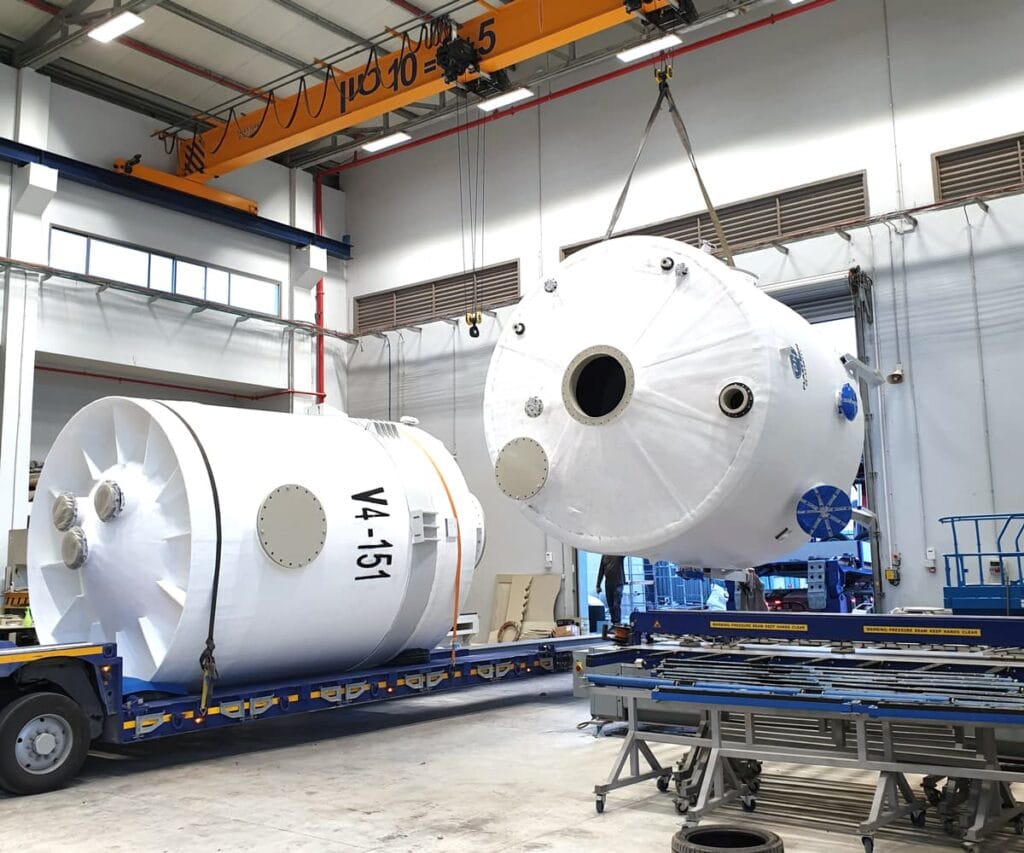
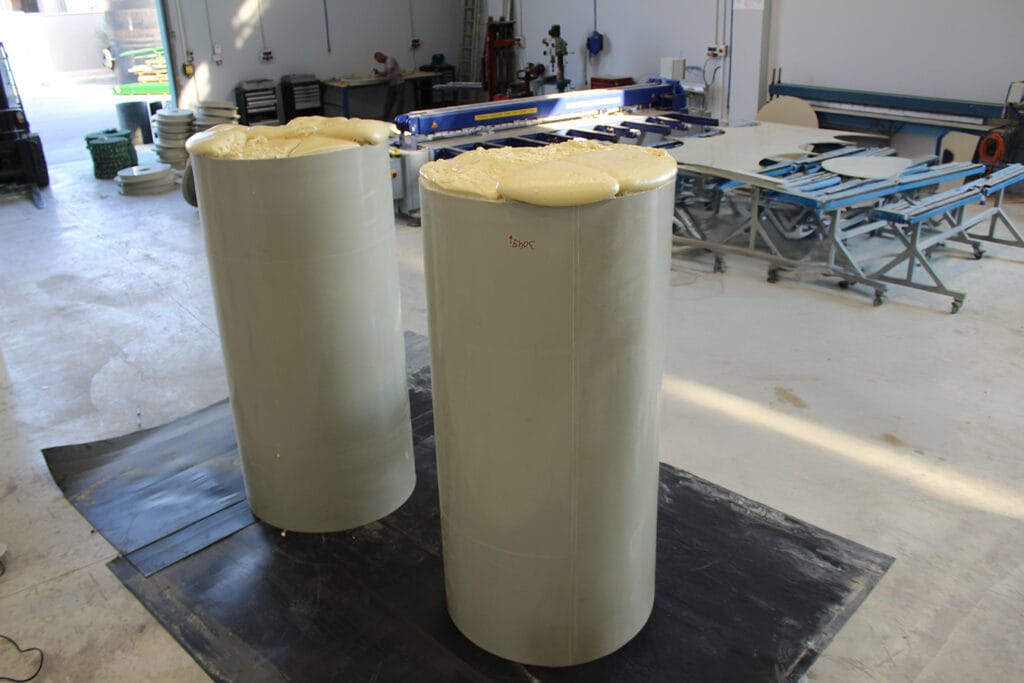
In the production phase, the design becomes reality using advanced CNC welding machines. We manufacture the tank in cylindrical sections (Cylinder Sections), where each section is adapted to the thickness planned for its level. Our automatic welding technology, based on strict DVS standards, allows for achieving an extraordinary result: A welding quality whose strength reaches approximately 110% relative to the original sheet strength. Finally, the various cylinders are welded to each other to create the final monolithic structure, precisely according to the thickness hierarchy determined in the design.
Material Selection for Large Plastic Tanks: Anatomy and Molecular Compatibility
The choice of "plastic" is too general. The success of the tank depends on the precise adaptation of the polymer to the stored liquid and environmental conditions:
- HDPE (High-Density Polyethylene): The ultimate choice for water reservoirs, brine, and wastewater exposed to the Israeli sun. Our HDPE is UV-stabilized at an engineering level, which prevents the breakdown of polymer chains under radiation. It is a material with excellent impact resistance, critical in large outdoor tanks.
- Polypropylene (PP-H / PP-C): The workhorse of the chemical industry. When temperatures rise above 60°C or when using harsh acids and alkalis, PP is the solution. We adapt the type of PP (homopolymer or copolymer) according to the minimum temperature at the site, to prevent brittleness in winter.
- PVDF and Dual Laminate Solutions: For extremely aggressive chemicals (such as strong oxidizers or solvents), where no standard plastic stands, we integrate an internal protective layer (Liner) from noble materials like PVDF, backed by the mechanical strength of fiberglass (FRP) in filament winding technology.
Welding Technology: A Two-Stage Process for a Monolithic Structure
The most critical point in any giant volume storage tank is the welding quality. To ensure that the tank functions as one strong and homogeneous unit, we at Plast-Hen implement an advanced production process combining two complementary welding technologies, under strict quality control:
- Creating the Cylinder Shell (Automatic Welding): Converting the flat plastic sheets into cylindrical sections (the central body of the tank) is performed on a fully automatic CNC welding machine from Wegener Germany. This machine performs Butt Fusion welding under full computer control of pressure, temperature, and time. The process ensures perfect precision and repeatability, producing a seam with mechanical strength that meets the strict design requirements of the DVS 2205 standard.
- Integration and Accessories (Extrusion Welding): In the second stage, connecting the cylinder sections to each other to create the final height, as well as welding the bottom, the roof, the outlet openings (flanges), and the accompanying accessories, is performed using Extrusion Welding. This process, performed by certified Plast-Hen welders, is done according to the parameters defined in the DVS 2207 standard. The use of an extruder allows for the addition of molten material in a controlled manner to strengthen complex connection areas and ensure absolute leak-tightness.
The Peripheral System: The Tank as Part of a Comprehensive Solution
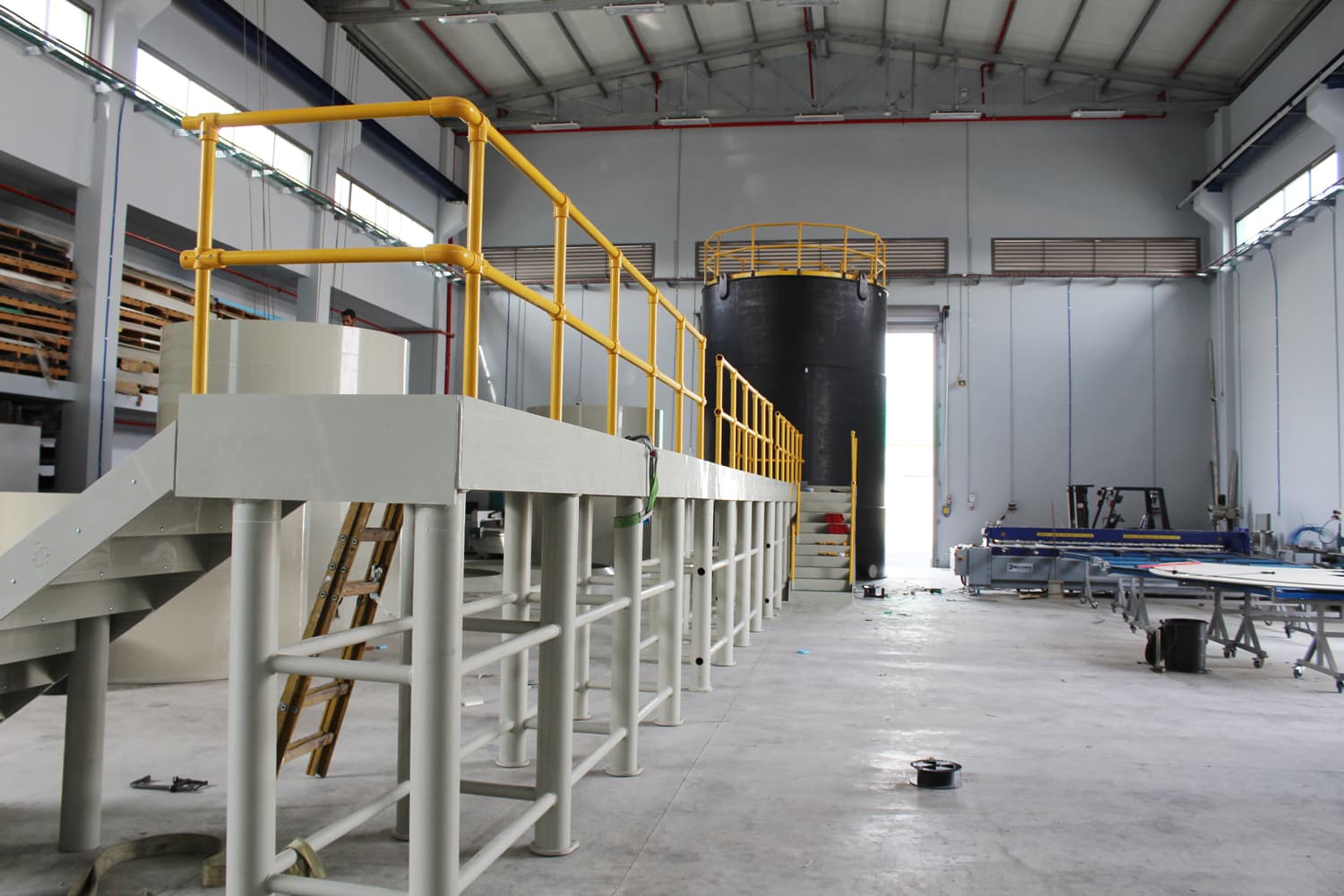
Here, the difference between a tank manufacturer and an engineering house is expressed. We understand that the tank does not stand alone in a vacuum. It must be protected, accessible, and connected to the process:
- Environmental Safety (Containment Bunds): Every large tank for storing hazardous liquids requires by law a containment bund with a volume of 110%. We design the bund from the same material as the tank, to ensure that in an emergency, it will withstand the same chemical attack and prevent an ecological disaster.
- Integration to Piping: The end fittings, flanges, and connections to the factory piping system are manufactured by us using precise machining and are welded to the tank as an integral part, which prevents leaks at critical connection points.
- Emission Treatment: In tanks storing volatile substances (such as HCL), we connect the tank vent directly to a small scrubber (absorption column), to neutralize toxic fumes and prevent air pollution.
Summary: Your Peace of Mind for the Next 25 Years
Building large plastic tanks is a long-term commitment. At Plast-Hen, we provide not just a product, but a complete engineering solution that takes into account the entire tank life cycle - from molecular design to daily operational safety.
Planning a new storage array? Do not take risks. Contact Plast-Hen's experts for the design of a reliable, safe, and standard-compliant system.