



An external bund can also collect releases from connections, valves, and equipment located inside it. An alarm does not necessarily locate the point of failure. The term “double wall” alone does not establish containment capacity, liquid-tightness, chemical compatibility, or monitorability. The system specification must be verified, and the choice starts with the failure scenario, inspection access, and monitoring plan.
Plast Hen has designed and manufactured thermoplastic and FRP systems since 1993. Our practical question is not merely whether secondary containment exists, but what it surrounds, how an operator knows liquid has entered it, and how the area can be inspected, cleaned, and repaired. Whether the search is phrased as double-wall tank vs tank with secondary containment or double-skinned tank vs bunded tank, the decision must be based on the specified containment boundary and credible release scenario.
What Boundary Does Each Configuration Actually Protect?
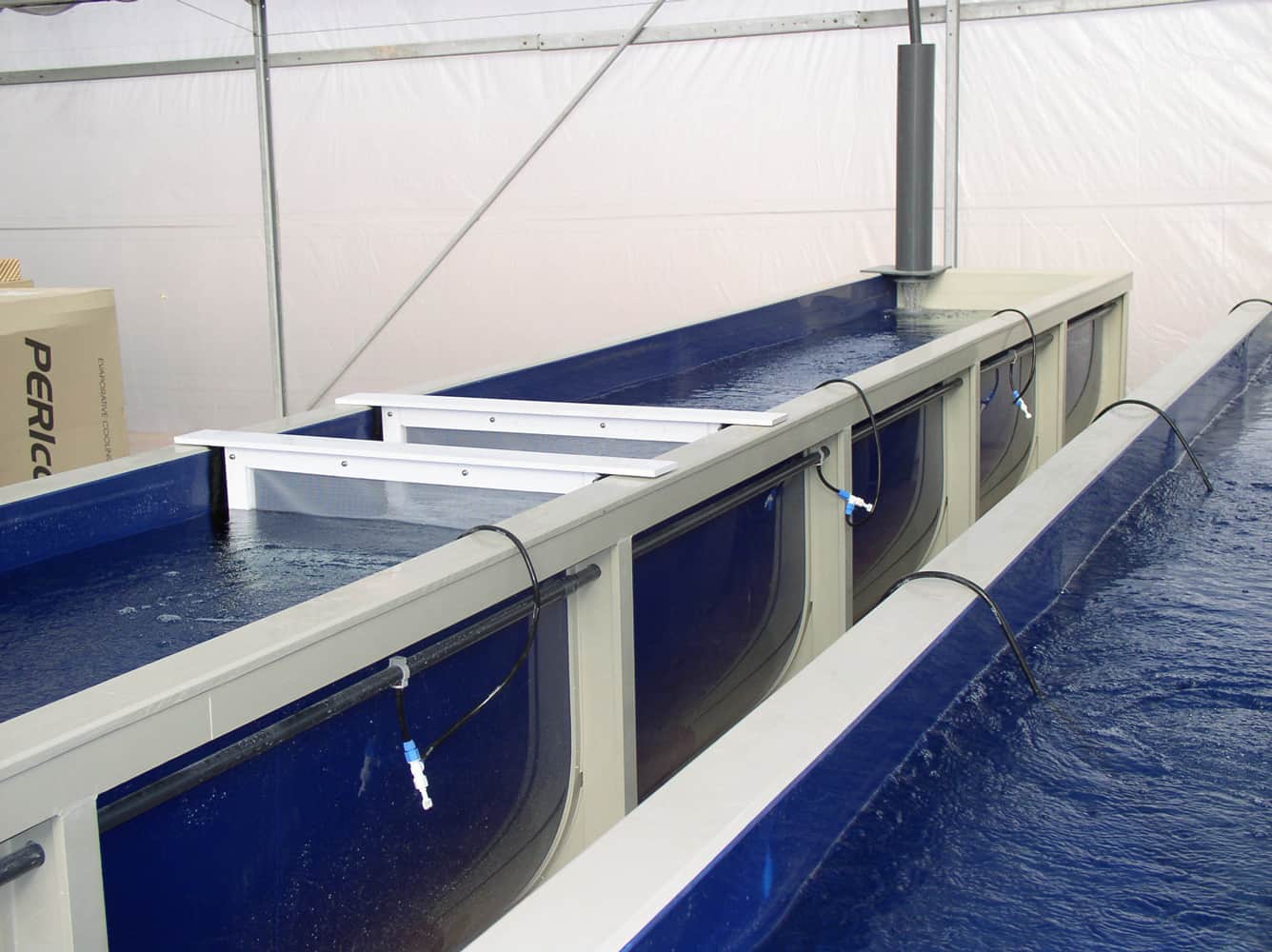
In a double-wall system designed for secondary containment, the inner vessel provides primary containment, and the outer shell forms the second barrier. The design must verify that the outer barrier is liquid-tight, compatible with the stored material, and has suitable containment capability for the selected scenario. The space between the barriers can be monitored. If leakage is directed to a detection point, failure of the inner wall may be identified before material reaches the environment.
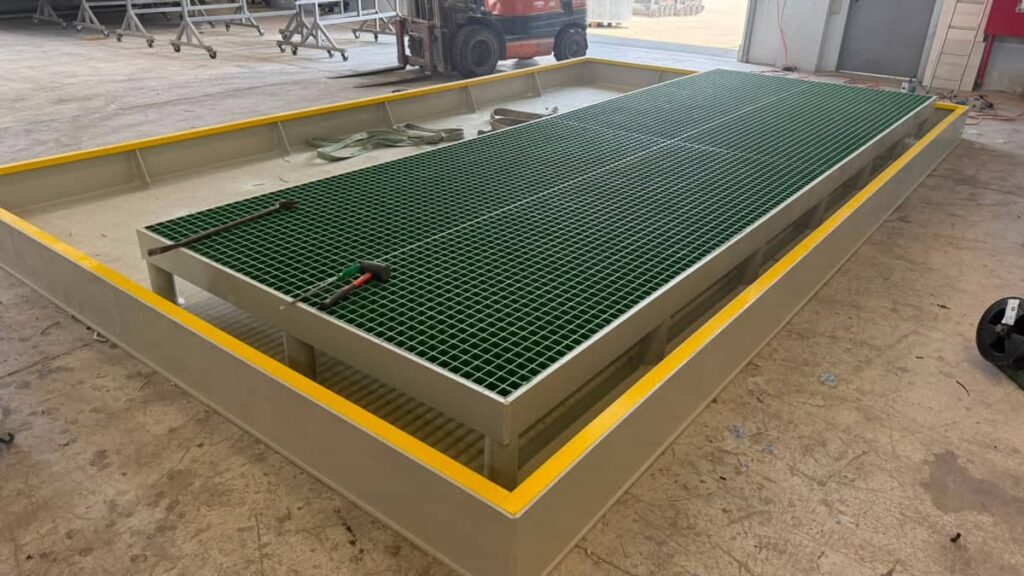
With a single-wall tank in an external bund, the secondary boundary sits around the vessel. A properly defined area may include flanges, valves, pumps and transfer points. Equipment outside that boundary is not protected merely because the tank itself is bunded. For broader design considerations, see our guide to containment basins for hazardous materials.
How Do Double-Wall and Bunded Tanks Compare Across Six Factors?
| Decision factor | Double-wall tank | Tank in external bund |
|---|---|---|
| Containment boundary | Usually close to the vessel body; fittings need separate review | May include the vessel, connections and equipment |
| Leak detection | Liquid/vapour sensor, vacuum loss, a change in a monitored pressure condition, a change in monitored liquid level or an inspection point | Visual inspection or sensor in the collection area |
| Primary-wall access | Partly hidden by the outer shell | May remain visible if inspection clearance is provided |
| Cleanup | Needs designed access and drainage from a narrow space | May provide more direct access if designed for maintenance |
| Footprint | Relatively compact | Requires an area around the vessel |
| Multiple vessels | Local protection for each vessel | May serve a shared area, subject to risk-based design |
Why Is Containment Not Necessarily a Leak Alarm?
A second wall or bund may retain liquid without alerting anyone. Interstitial leak detection may use liquid or vapor sensing, a change in a monitored pressure condition, loss of vacuum, monitoring liquid level, or a planned manual inspection point. The geometry must lead a credible leak to the detector; disconnected pockets or a poorly located low point can delay indication.
A bund may allow direct visual detection, but performance depends on inspection frequency, lighting, cleanliness, and sight lines. A level or leak sensor can add an alarm where continuous observation is impractical. Rainwater and debris can reduce available capacity and obscure the source of liquid.
 During acceptance testing, do not stop at confirming that a detector is installed. Test its operation, identify who receives the alarm and document the response procedure
Which Five Release Points Must the Secondary Barrier Cover?
1. Vessel wall
This is the natural scenario for a monitored interstitial space. A bund can also collect the release if its base, penetrations, and drainage path are sound.
2. Tank bottom
The bottom is difficult to view in many installations. A double-wall system needs a way to monitor its lowest area; a bund needs a route to a visible or instrumented collection point.
3. Connection or flange
An outer shell around the vessel body does not necessarily contain an external fitting. A bund can place the connection inside its boundary; a double-wall design may require a dedicated enclosure.
4. Valve or pump
Operating equipment can drip or fail. A broad external bund may contain it, provided access is not obstructed. Equipment outside the boundary needs local containment or controlled drainage.
5. Nearby pipework and filling point
Neither configuration automatically protects an entire pipeline. Map where liquid will travel after a hose disconnect, pipe rupture or overfill.
Inspection and repair access
An external bund with working clearance may allow direct inspection of the wall, seams, supports and fittings. Crowded equipment or standing liquid can remove that advantage. Safe access, cleaning and controlled drainage therefore belong in the design brief.
In a double-wall tank, the outer shell hides part of the primary wall. The monitoring provisions must match the system design: liquid-sensing arrangements need a credible path to the sensing point, while sealed pressure- or vacuum-monitored systems rely on a detectable change in the monitored condition. Access, testing and any required drainage must be defined for the selected arrangement. The team should also establish whether the failure area can be reached without dismantling the installation.
Material selection is a separate decision: chemical and temperature compatibility must be checked for both barriers. Our guide to matching plastic tanks to industrial projects covers the wider vessel-selection process.
How Can You Verify That the Detection Path Actually Works?
At Plast Hen, the design review can close a three-part verification loop: path, signal, and response. A safe functional test under the manufacturer's instructions and site procedure confirms that the detector and end alarm operate. It should also verify that the signal reaches the responsible person and links to documented isolation, drainage and return-to-service actions.
Separately, design documents should show that a credible release has a path to the sensing point; testing the sensor alone does not validate that geometry.
| Verification element | Acceptance question | Failure it can reveal |
|---|---|---|
| Path | Does every relevant area drain to the detection point? | Trapped pockets, blockage or incorrect fall |
| Signal | Do the sensor and end alarm operate under site conditions? | Wrong sensor, broken circuit or incorrect threshold |
| Response | Who receives the alarm and what happens first? | Alarm without an owner or procedure |
A Worked Boundary Check: Three Leaks, Three Different Answers
Consider one tank with a bottom outlet, an isolation valve and a remote filling connection. If the inner vessel wall develops a slow leak, a monitored interstitial space can give a focused indication, provided the release reaches the sensing zone. An external bund can retain the same release, but detection depends on a clear route, visibility or a suitable sensor.
If the isolation valve seal fails, the answer changes. A close-fitting outer shell may not surround the valve at all. A bund only helps if the valve is physically inside its impermeable boundary and the discharge cannot jet or drain beyond it. Local containment may therefore be needed even where the vessel body is double-walled.
If the filling hose disconnects, neither label answers the question. The deciding facts are where the coupling sits, where the liquid will run and whether overfill or transfer controls stop the release. This three-scenario check prevents a specification from solving an inner-wall failure while leaving routinely operated connections outside the protected area.
Who Owns Commissioning, Inspection and Alarm Response?
Before handover, assign a named owner and an acceptance record to each control. The project responsibility matrix should state who defines the test points and limitations of the containment design, who demonstrates the complete alarm chain rather than only the local detector, who receives an alarm on every shift and who has authority to isolate transfer.
The maintenance plan should state how sensing points, sensor access, hidden surfaces and any low points or drainage required by the selected arrangement will be checked after pipework or layout changes.
| Handover item | Evidence to retain | Operational owner |
|---|---|---|
| Containment boundary | Marked drawing covering vessel, fittings and transfer points | Process/design engineer |
| Detection path and sensor | Functional test and detector limitations | Controls and maintenance |
| Alarm response | Recipient, isolation sequence and escalation route | Site operations |
| Inspection access | Sensing points, any arrangement-specific low points or drainage, and a hidden-area method | Maintenance |
| Change control | Review after moving a valve, hose, pump or pipe | Site engineering |
The job titles can differ by site; the important point is that no control is left between contracts. A sensor without an alarm owner, or a bund without a drainage and inspection owner, is an incomplete operating system.
When Does a Double Wall Fit Better, and When Does an External Bund?
- One vessel and limited floor area: a monitored double-wall system may be compact, provided fittings and access are addressed.
- Many fittings or nearby equipment: an external bund may define a broader, clearer boundary.
- Focused indication of entry into the interstitial space: a monitored interstice provides a defined detection zone; detection time depends on the method, geometry and operating mode.
- Direct visual inspection and repair access: a spacious bund may help if clearance is maintained.
- Outdoor installation: evaluate rainwater, UV exposure, mechanical impact and drainage for either configuration.
- High downtime cost: compare detection, isolation, emptying, cleanup, repair and return-to-service time.
The containment decision can be integrated into the design of custom plastic tanks for liquid storage. External containment is another option, described in our page on industrial containment basins.
What Do Real Projects Teach Us About Defining the Boundary?
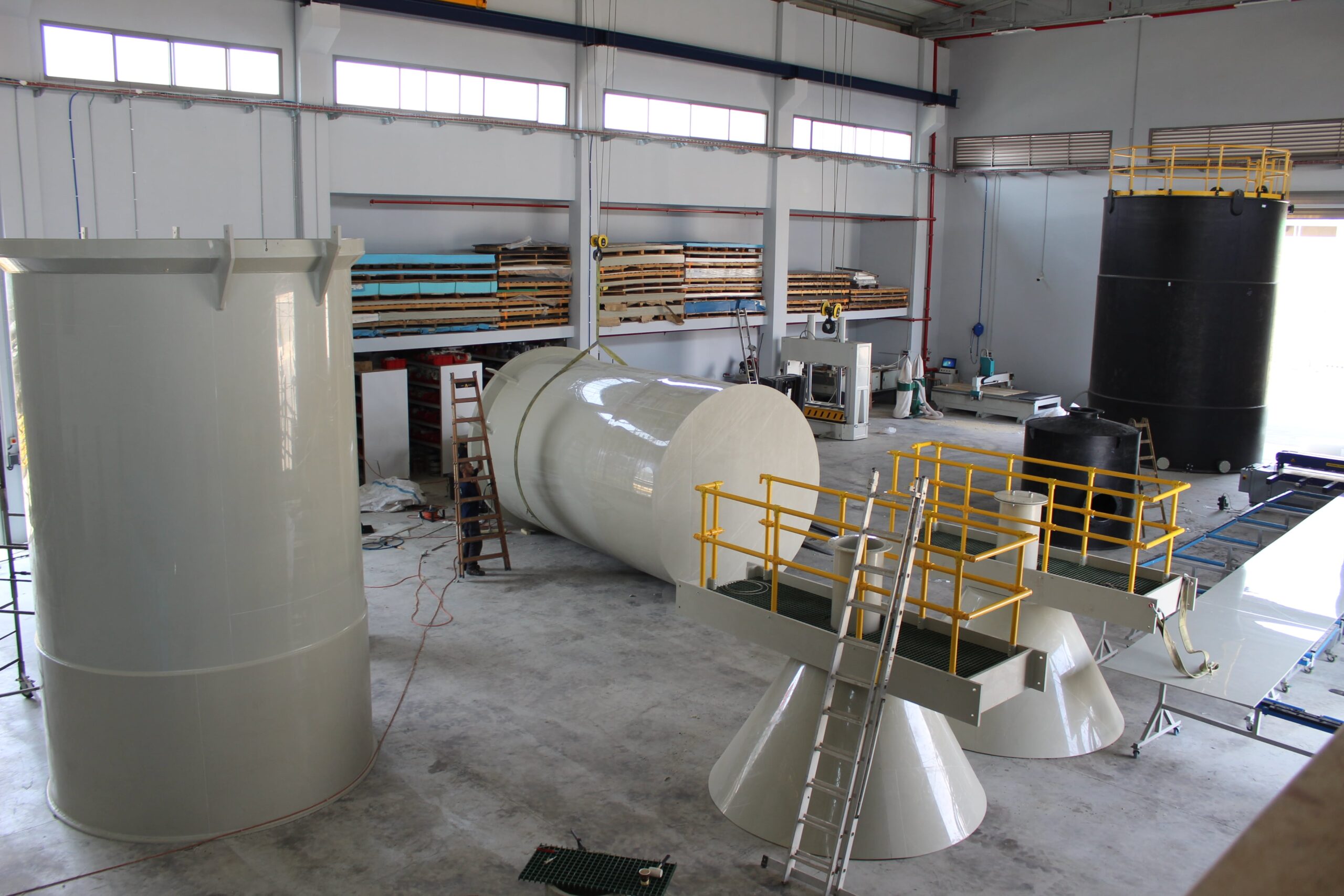
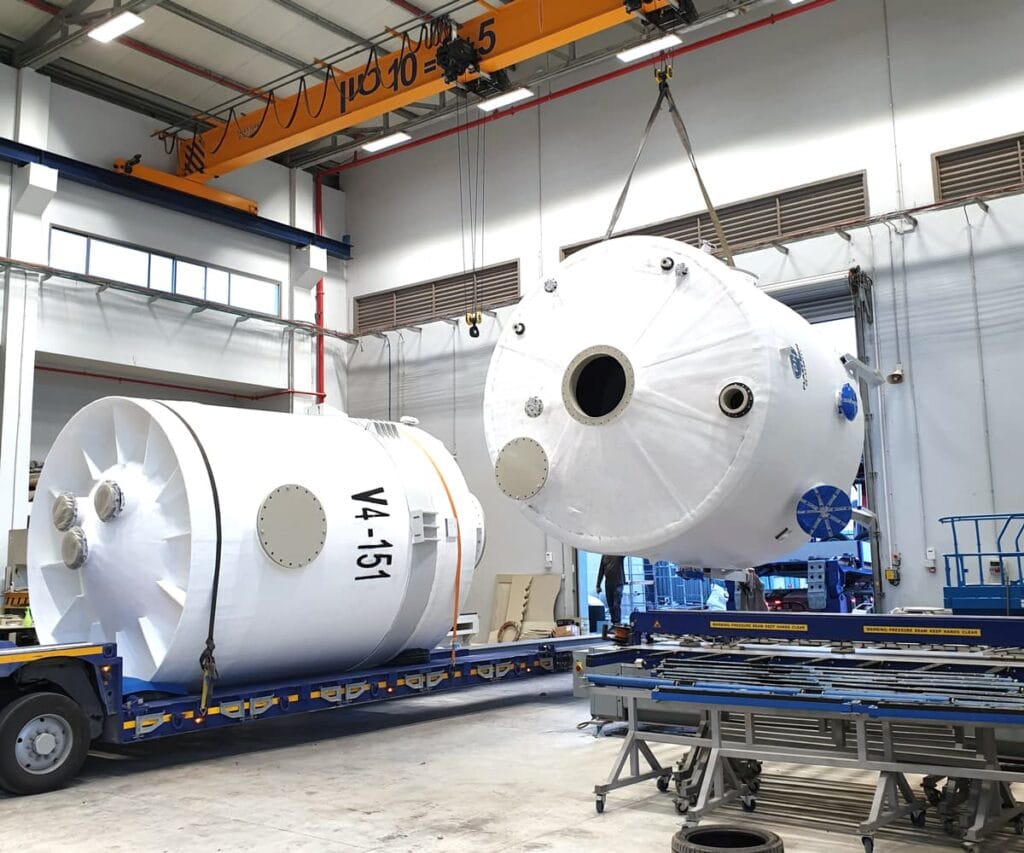
For the Rotem Amfert Facility 50 expansion, we designed and manufactured 40 and 30 cubic metre FRP tanks with internal PP lining. This is a dual-material construction: FRP provides structural strength and PP provides the specified chemical-contact surface. It shows why two materials or layers must not be mistaken for secondary containment. Unless the specification defines an interstitial space, containment capability and monitoring method, the project does not prove a double-wall tank or leak-detection system.
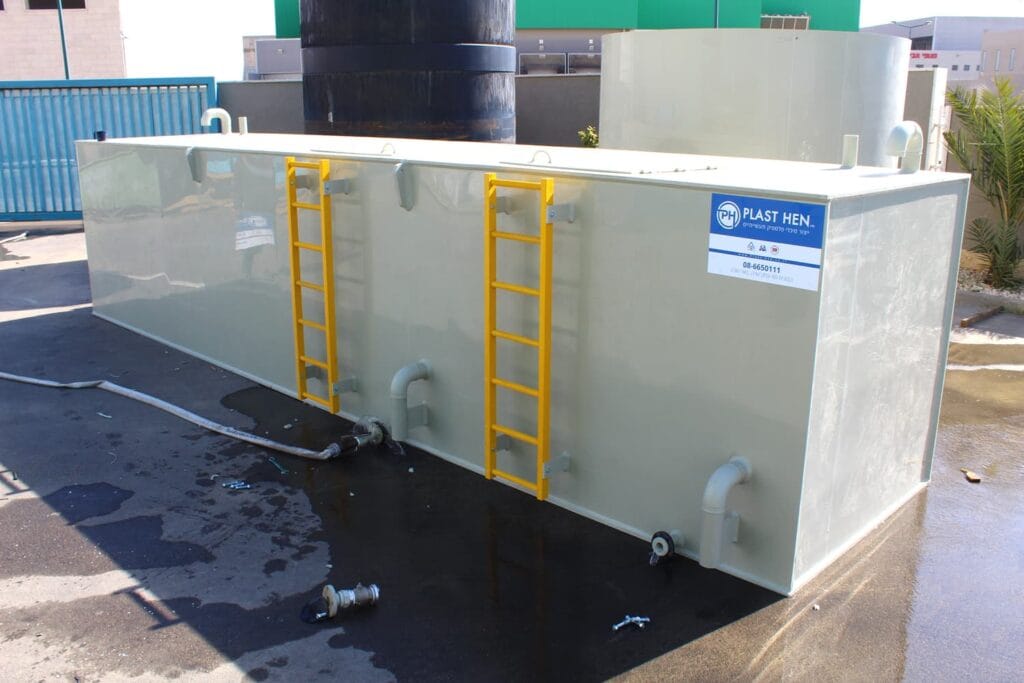
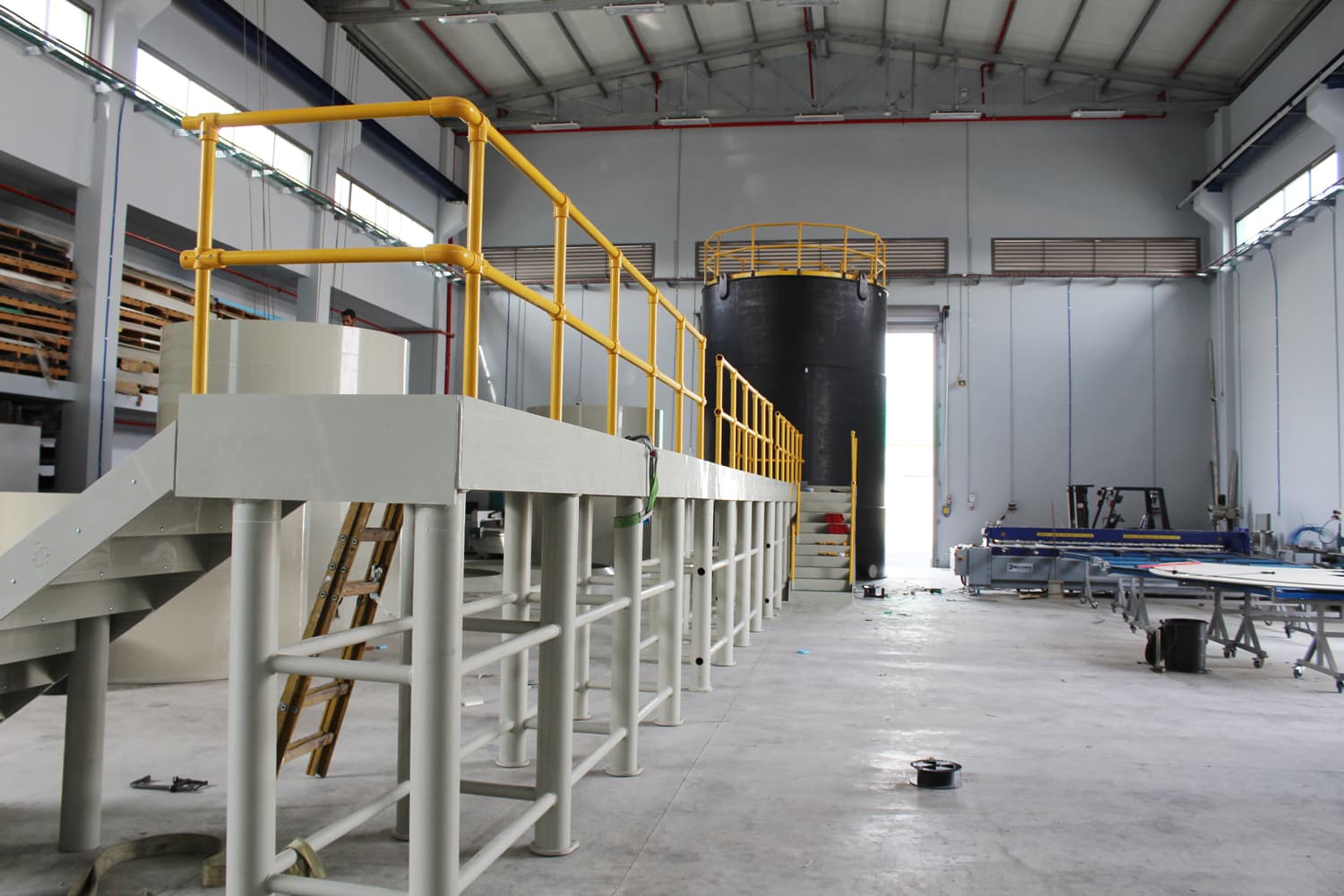
In another Rotem Amfert project, we manufactured and installed three 60 cubic metre settler tanks with flow systems, internal partitions, drainage networks and roof access walkways. Transport required nine escort vehicles, and site installation was completed in four working days. This is not evidence that the tanks were double-wall or bunded. Its lesson for this comparison is that the containment decision must be coordinated with fittings, maintenance access, transport and installation logistics from the design stage.
How should cost be compared?
Neither configuration is universally cheaper. Compare floor area and civil works, monitoring and controls, inspection access, cleanup, downtime and repair after an alarm, not only the tank quotation. A lower purchase price can create higher operating cost if the low point cannot be tested or a leaking fitting cannot be reached.
When can a combined solution make sense?
Some risks extend beyond the vessel body. A monitored interstitial space can flag an inner-wall failure, while a wider containment area addresses fittings and transfer incidents. Combined protection is not an automatic requirement; it should follow the failure scenario, permit conditions and environmental consequences.
Acceptance and maintenance checks
- Apply a test signal under the manufacturer's instructions and site procedure, then confirm the detector, alarm recipient and response procedure.
- Verify a continuous path from each credible leak to the detection point.
- Confirm access to low points, controlled drainage, cleaning and repair areas.
- Map the wall, bottom, fittings, valves, pump and filling point separately.
- Set inspection and functional-test intervals from the risk assessment, permit conditions and equipment instructions.
Map the Release Scenario Before Choosing the Configuration
For the remaining specification inputs, see matching tanks to industrial projects, quality and acceptance standards for plastic tanks, tank systems for industrial wastewater, industrial tank material comparison, polypropylene tanks for industry, thermoplastic and fiberglass tank applications and large custom plastic tanks. These pages address complementary inputs without replacing the containment-boundary decision.
Not sure which containment boundary should cover the tank, fittings and nearby equipment? Send Plast Hen the stored chemical, tank volume, installation location and connection layout. We will map credible release scenarios and assess a suitable project configuration: 050-2022246 | [email protected].