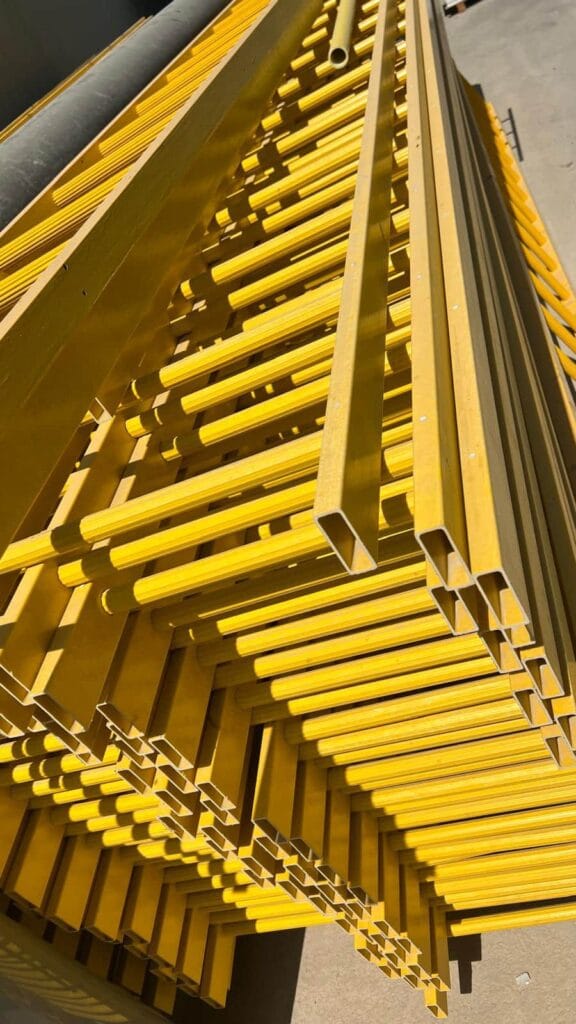


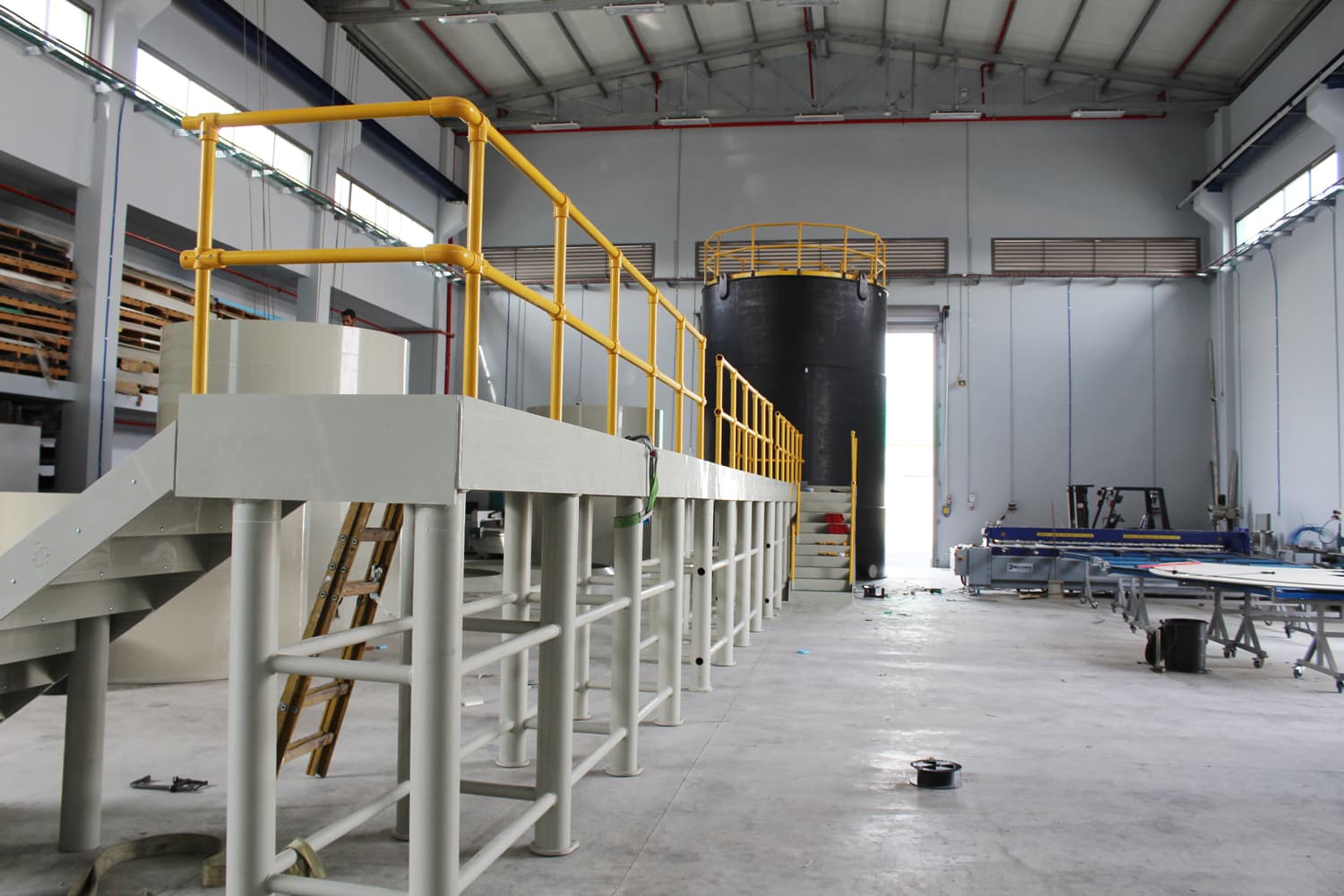


In industrial environments such as chemical plants, wastewater treatment facilities, and marine sites, safety railings must withstand particularly harsh conditions. Constant exposure to chemical fumes, high humidity, sea spray, and extreme temperatures causes traditional metal railings to deteriorate within just a few years. Fiberglass railings (FRP - Fiber Reinforced Plastic) offer an engineering alternative designed to meet these challenges and last for decades without routine maintenance.
Plast Hen designs and manufactures custom FRP railing systems for a wide range of industrial applications, adhering to international safety standards and providing seamless integration with storage tanks, grating platforms, and walkways.
Features and Benefits of FRP Railings
Complete Resistance to Corrosion and Chemicals - Railings for Desalination Plants
Unlike regular steel or even stainless steel that can be damaged in acidic or saline environments, fiberglass railings are completely immune to rust. The composite material does not react with acids, bases or salts, maintaining its structural integrity even after years of exposure to corrosive fumes in wastewater plants, seawater in desalination facilities or chemicals in petrochemical plants.
Electrical and Thermal Insulation
Fiberglass is naturally an insulating material, making these railings ideal for power stations, electrical facilities, and areas with electrocution hazards. Additionally, unlike metal railings that heat up in summer and freeze in winter, FRP railings maintain a comfortable touch temperature in all weather conditions - a significant advantage for worker safety.
Optimal Strength-to-Weight Ratio
Fiberglass railings are as strong as steel but weigh only a quarter as much. This low weight enables quick and easy installation without heavy lifting equipment, reduces loads on existing structures, and allows installation on tank roofs and elevated platforms without special reinforcement.
Zero Maintenance
Steel railings require repainting every one to two years to prevent rust. FRP railings come with pigmentation built into the material itself, are UV resistant and do not fade or peel. No anti-rust treatment, painting or part replacement is needed - resulting in significant operational cost savings over the life of the facility.
FRP Railings Technical Specifications
The values below represent typical ranges and may vary depending on profile, wall thickness, and working conditions. It is recommended to verify specific suitability for project requirements.
| Property | Typical Value | Notes |
|---|---|---|
| Density | 1.5-2.0 g/cm³ | About a quarter the weight of steel |
| Tensile Strength | 100-250 MPa | Depends on fiber direction |
| Service Temperature | -40 to +80°C | Depends on resin type |
| Electrical Conductivity | Insulator | No electrical conduction |
| UV Resistance | Excellent | With coating or built-in pigment |
| Expected Lifespan | 25-50 years | In an industrial environment |
Fiberglass Railings vs. Metal and Stainless Steel
| Criterion | FRP | Galvanized Steel | Stainless Steel 316 | Aluminum |
|---|---|---|---|---|
| Corrosion Resistance | Excellent | Medium | Good | Good |
| Chemical Resistance | Excellent | Poor | Medium | Medium |
| Weight | Very Low | Heavy | Heavy | Medium |
| Electrical Insulation | Yes | No | No | No |
| Maintenance Required | None | Annual painting | Minimal | Minimal |
| Installation Cost | Medium | Low | High | Medium |
| Lifecycle Cost | Low | High | Medium | Medium |
Custom Railing Manufacturing
We manufacture complete railing systems according to specific requirements, integrating with various products to create a comprehensive and uniform safety system.
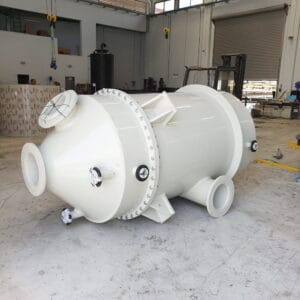
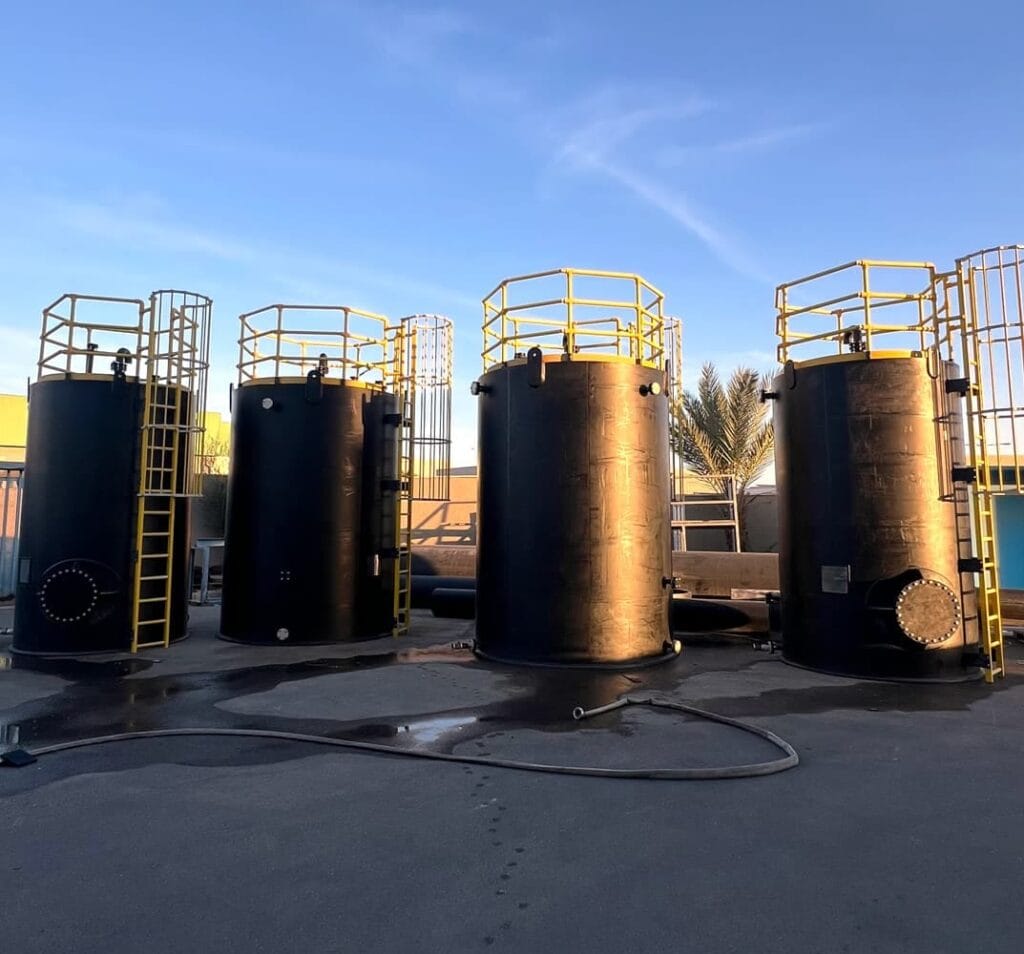
Railings for Storage and Process Tanks - The railings are designed to connect to all types of tanks, roofs and columns - whether tanks we manufacture such as polypropylene tanks and FRP tanks, or existing installations made from other materials. Engineering connections are adapted to the loads and specific working conditions of each project.
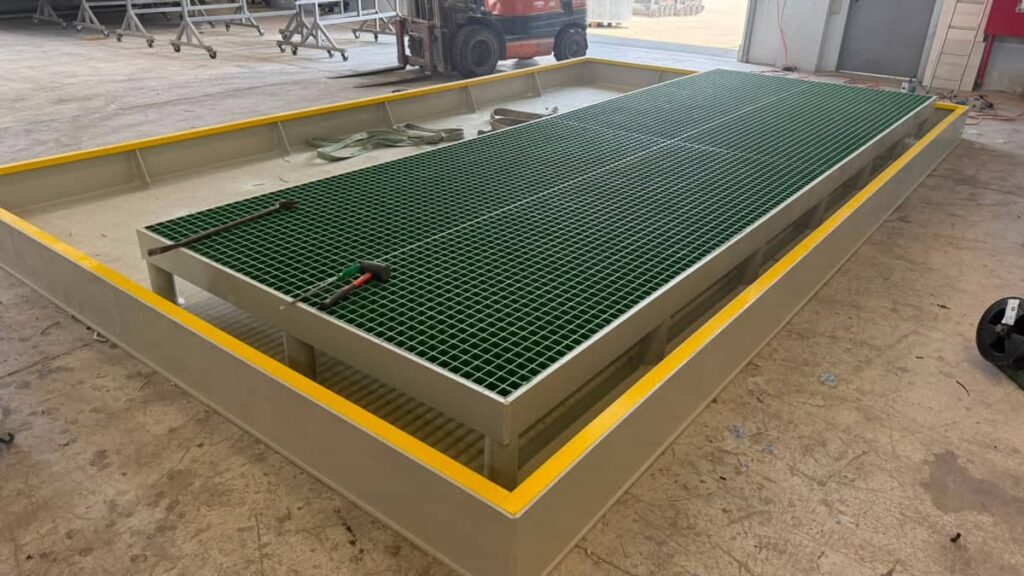
Platforms and Walkways - Railing systems that integrate with walkways to create safe work platforms around tanks, scrubbers and process systems.
Safety Ladders with Cages - Height access solutions from composite materials, including safety ladders with protective cages.
FRP Railings Work Process for Industry
Every railing project at Plast Hen begins with a comprehensive engineering survey. Our team visits the site, examines environmental conditions, measures existing installations and identifies specific challenges - type of chemical exposure, wind loads, access conditions and safety requirements.
During the design phase, our engineers adapt the railing system to project requirements: selecting appropriate profiles, designing engineering connections and integration with existing systems. Every plan is checked against safety requirements and approved with the client before production begins.
Manufacturing takes place at the Plast Hen facility, with quality control at every stage. Profiles are cut, assembled and inspected before shipment. On-site installation is relatively quick thanks to the material's low weight and precise factory preparation - a typical project is installed within just a few days.
Applications for Fiberglass Railings in Industry
Plast Hen's fiberglass railings are installed in a wide range of industrial facilities throughout Israel, with each environment presenting unique challenges.
Wastewater Treatment Plants - Safety Railings for WWTP - The working environment in wastewater plants is characterized by constant humidity and corrosive gases such as hydrogen sulfide and ammonia. Metal railings in these facilities rust quickly and require frequent replacement. FRP railings are corrosion-resistant railings that maintain their structural stability under these conditions without signs of wear, providing a long-term solution along settling pools, access corridors and observation platforms.
Chemical and Petrochemical Plants - In environments involving exposure to acids, bases, and organic solvents, chemical resistance is critical. FRP railings are installed around chemical storage tanks, along piping routes and in work areas with hazardous materials. The material's electrical insulation adds a safety layer in areas with spark hazards.
Food and Pharmaceutical Industries - The strict hygiene requirements in these industries demand materials that are easy to clean and do not develop contamination. The smooth surfaces of FRP railings do not absorb dirt or bacteria, are easily washable and meet food safety standards. Railings are installed in production areas, around process tanks, and in traffic corridors.
Desalination and Marine Environments - High salinity is metal's greatest enemy. In desalination plants, ports,s and coastal facilities, metal railings fail within just a few years. Fiberglass railings are completely resistant to seawater and salt spray, providing a reliable solution for years without maintenance.
Power Stations and Electrical Facilities - The natural electrical insulation of FRP makes it the preferred choice in high-voltage areas. Unlike metal railings that can pose electrocution hazards, fiberglass railings provide safe protection for workers even near electrical equipment.
Considerations in Choosing Railings - When FRP and When Other Materials
FRP railings are the recommended choice when the environment includes exposure to chemicals, high humidity, salinity or corrosive fumes. Railings for chemical plants are particularly suitable for facilities where routine maintenance is expensive or difficult to perform, such as high platforms, remote areas or continuous work environments.
In cases requiring electrical insulation - such as power stations, electrical rooms or areas with spark hazards - FRP is the safest solution. Also, when there are weight limitations on the structure, such as installation on tank roofs or existing platforms, FRP's low weight provides a significant advantage.
Conversely, in dry and clean environments without chemical exposure, galvanized steel railings may suffice and sometimes be cheaper in initial installation cost. However, it is important to consider the full lifecycle cost - including periodic painting, repairs and replacements - not just the initial cost.
For projects where there is doubt about the right choice, the Plast Hen team performs an engineering assessment and assists in selecting the most suitable material for working conditions and budget.