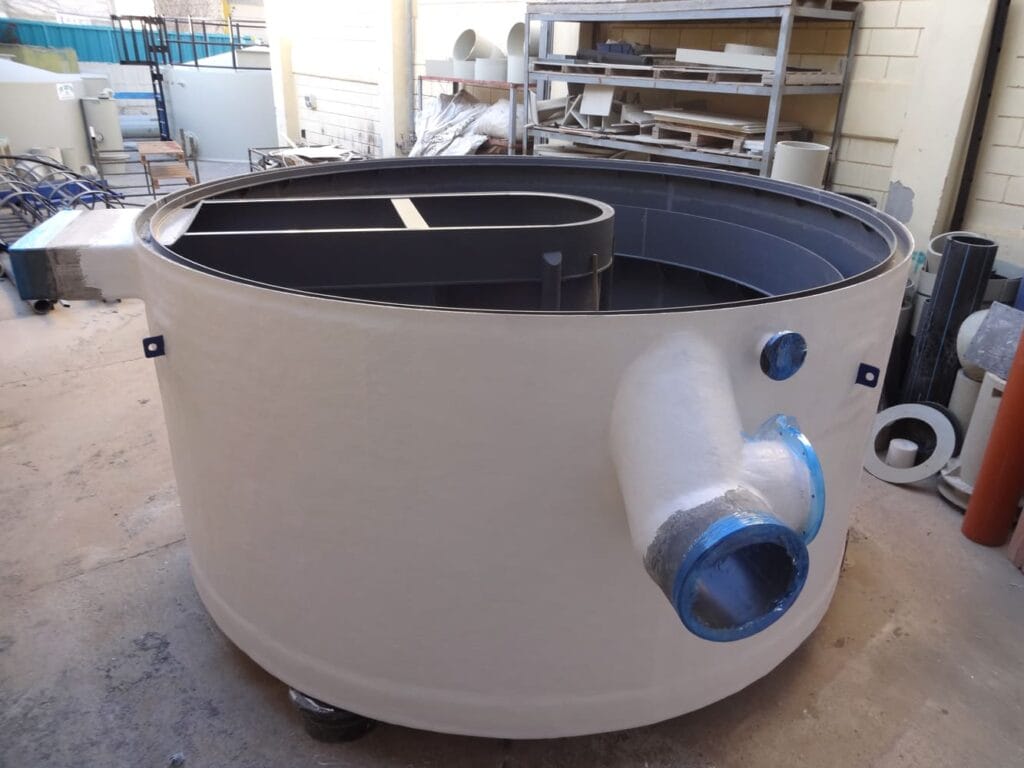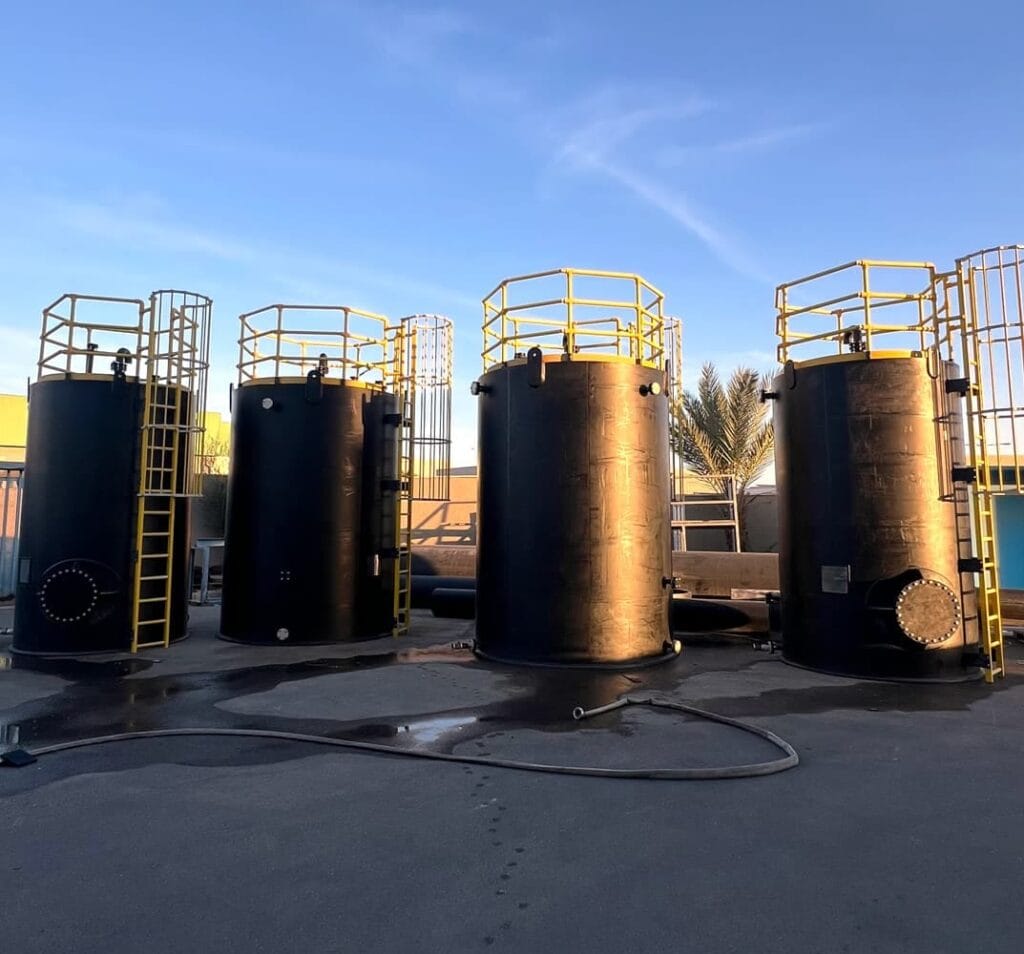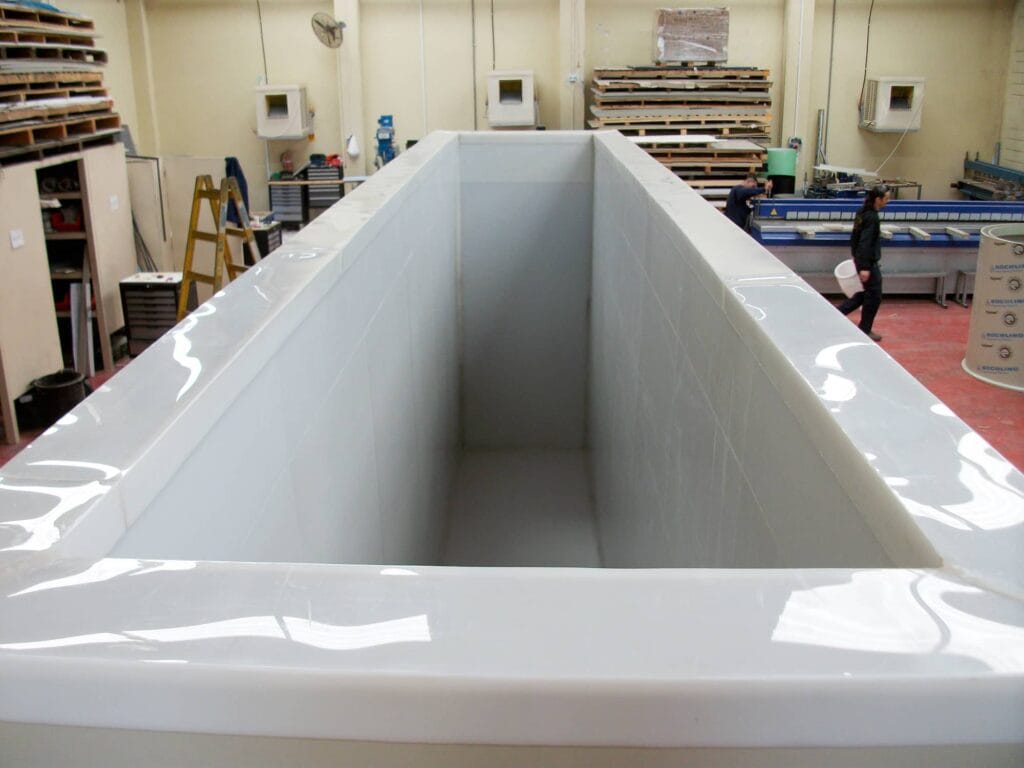


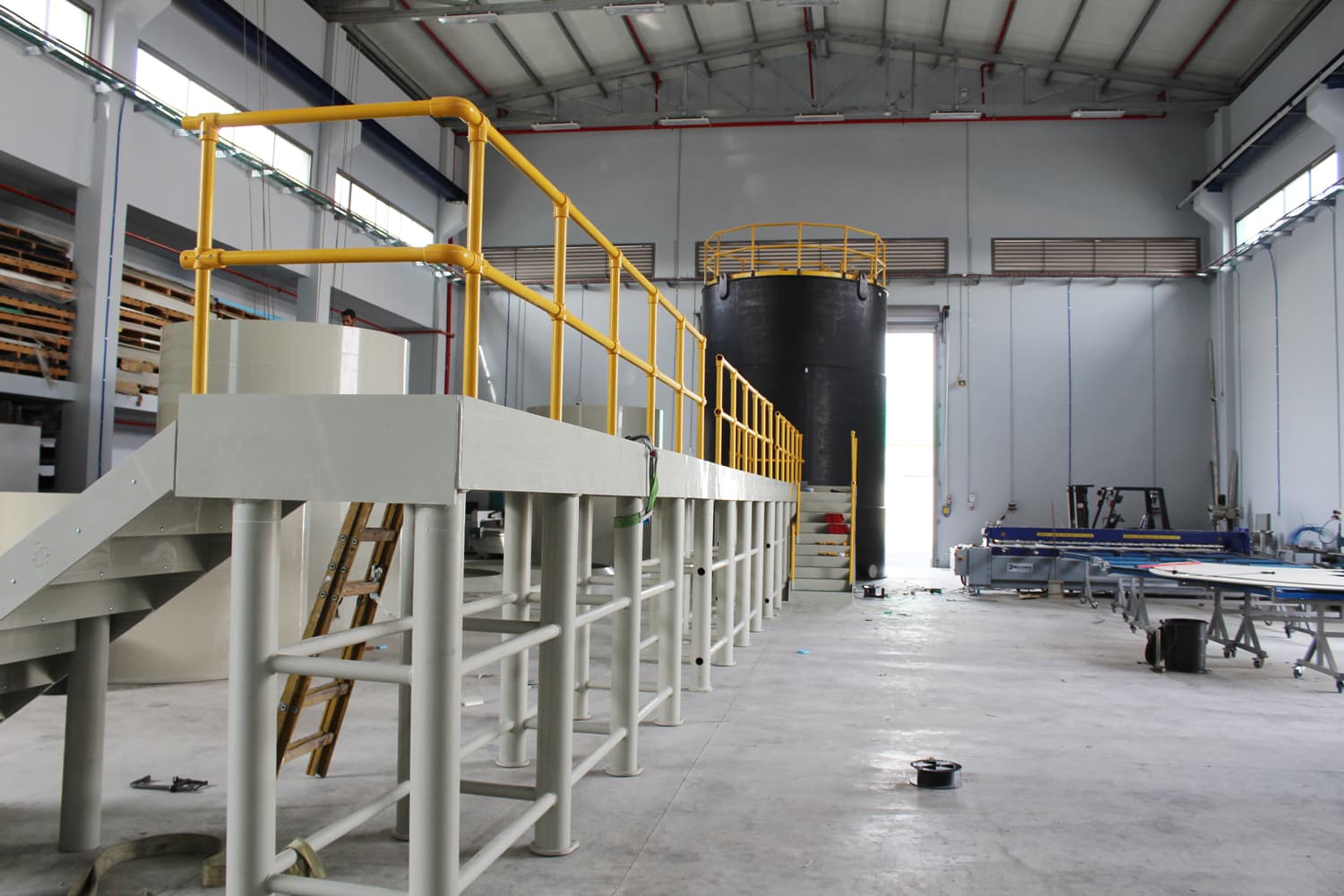


There is no responsible universal price list for this calculation. Tank capacity alone says little about chemical compatibility, temperature, specific gravity, nozzle loads, access or the cost of stopping a process. At Plast Hen, we have designed and manufactured thermoplastic and fiberglass tank systems in Beer Sheva since 1993. Our practical approach is to compare technically valid options over the same study period and under the same operating assumptions.
What belongs in a chemical tank lifecycle cost?
Begin with a defined service envelope and a time horizon that makes sense for the facility. Then map every cost that the tank creates or influences. The exercise should include expected expenditure and a separate risk scenario, so an unlikely leak is not treated as certain but is not ignored either.
| Lifecycle stage | Costs to include | Information to request |
|---|---|---|
| Specification and purchase | Engineering design, material selection, fabrication, fittings, documentation and factory testing | A complete scope, not a shell-only price |
| Installation | Transport, lifting, foundation, anchorage, piping, controls and commissioning | Layout, route survey and connection plan |
| Operation | Cleaning, inspection, calibration, consumables, parts and labour | A risk-based maintenance plan |
| Failure exposure | Lost product, containment, cleanup, production interruption and recovery | Credible failure scenarios and recovery times |
| End of service | Drain-down, decontamination, disconnection, removal and replacement | An isolation and removal strategy |
How is chemical tank lifecycle cost calculated?
Working formula: lifecycle cost = purchase + engineering + transport and installation + maintenance and inspection + expected downtime + repairs + end of service. For each scenario, estimate expected annual downtime cost as expected events per year × downtime hours per event × the site's cost per downtime hour. Project the result across the study period using the same base year and financial assumptions for every option.
Use the same chemical, concentration, temperature, working volume and availability target for every option. Otherwise, the spreadsheet compares different duties rather than different solutions. This is especially important when comparing plastic storage tank configurations with different fittings and supply boundaries.
| Scenario | Assumption | Decision test |
|---|---|---|
| Base | Planned maintenance with no exceptional failure | Routine expenditure and normal availability |
| Severe | Major repair and a limited outage | Backup capacity, lead time and recovery cost |
| Extreme | Failure requiring unplanned replacement | Operational, environmental and logistical impact |
Test the result by changing one uncertain input at a time, such as replacement lead time, outage duration, inspection frequency or recurrence rate. This reveals which assumption can change the preferred option.
Why is purchase price only the first cost boundary?
A bare tank body is not a functioning storage system. Nozzles, flanges, a manway, venting, level measurement, overfill protection, supports, anchorage and documentation may sit inside one quotation and outside another. A low figure can simply reflect a narrower scope.
The engineering basis matters just as much. A specification should identify the chemical and concentration, normal and upset temperatures, working volume, specific gravity, possible pressure or vacuum, outdoor exposure, piping reactions and cleaning method. If these inputs arrive after the order, redesign and site modifications can erase the apparent saving.
Material selection also affects the whole cost curve. PP, HDPE, PVC, PVDF and FRP differ in chemical resistance, temperature response, joining methods and repair routes. A structured comparison of industrial tank materials can narrow the field, but final approval must use the complete service conditions rather than a generic compatibility label.
The most useful shortlist is duty-specific. Polypropylene tanks may suit one temperature and chemical envelope, while HDPE tank construction may suit another. Neither material name is a substitute for reviewing concentration, temperature, load duration and joining details.
 Ask each bidder to list exclusions in plain language. A clear boundary of supply is more valuable than a low number surrounded by assumptions
How does good tank engineering reduce later costs?
Tank design is not limited to wall thickness. Nozzle location affects the moment transferred from connected pipework. Manway size and position determine whether inspection and cleaning are practical. The base determines how evenly the filled weight reaches the foundation. Site location shapes crane access, maintenance space and the future replacement route.
For thermoplastic tanks, design principles such as DVS 2205 connect material behaviour with time, temperature and loading. They do not replace a proper process specification. They provide an engineering framework for turning that specification into a structure. Our guide to quality standards for plastic tanks explains why design, material traceability, welding and inspection have to be treated as one system.
Plan for removal while the tank is still on the drawing. Can lifting equipment reach it? Can pipework be disconnected without stopping neighbouring lines? Is there enough room to position a replacement before the old unit is removed? Space saved during construction may become a major expense during an urgent outage.
Which delivery, foundation and piping costs belong in the calculation?
A large tank needs a verified transport route, lifting points and an installation sequence. Where the finished dimensions exceed practical transport limits, site fabrication may be the better route. That choice changes quality controls, work duration and the amount of plant disruption. The planning issues around large custom plastic tanks extend well beyond tank volume.
For a vertical flat-bottom tank, the support surface should be level, continuous and suitable for the full operating load, subject to the design and manufacturer's instructions. Other configurations require rings, frames, legs or saddles designed for the tank and its loads. Connected pipework can also create local stress. Heavy lines, poor alignment and distant supports may transfer forces into tank nozzles.
Where stiffness, external loads or a corrosion-resistant laminate are part of the design basis, FRP tank construction creates a different inspection and repair profile that should be costed explicitly.
Coordinating the tank supplier with industrial piping design and installation before fabrication allows support positions, flexible sections and connection tolerances to be resolved on paper. Correcting them after filling is slower and more disruptive.
How should chemical tank maintenance and inspection be planned?
There is no single inspection interval for every chemical tank. A maintenance plan should consider chemical hazard, service severity, outdoor exposure, process criticality, previous findings and the manufacturer's recommendations. An outdoor tank exposed to thermal cycling and vibrating pipework does not deserve the same plan as an indoor tank in stable duty.
What should routine checks cover?
Routine observations may cover moisture, staining, distortion, supports, anchors, vents, nozzles, gaskets, level instruments and overfill protection. A closer assessment may require cleaning, internal access, measurements or weld examination. The method should match the material and credible damage mechanism, not simply the inspection equipment available.
Records have direct economic value. Photographs from consistent positions, repair histories and comparable readings reveal change over time. Without that history, each inspection starts from zero and the facility must choose between conservative intervention and risk that cannot be quantified.
When does a closer inspection produce value?
An inspection is useful when it answers a defined question. Suspected piping load calls for checking alignment and supports. Visible seepage calls for mapping the source and surrounding area. A process change calls for a renewed compatibility review. A generic checklist cannot replace an investigation of the likely failure mechanism.
Changes to the transfer system matter too. Modifying plastic pipe welding and connections near a nozzle can alter restraint, alignment and the forces reaching the tank, even when the vessel itself has not been modified.
Acceptance criteria should be agreed before the inspection: which findings allow continued service, which require repair and which trigger shutdown. This reduces the temptation to reinterpret evidence when production is waiting. A leak test after repair can confirm tightness under the test conditions, but it does not by itself prove long-term fitness for every load case.
Tank entry is not a routine shortcut. Isolation, drain-down, cleaning, atmospheric assessment and the facility's confined-space controls must be planned before anyone enters. Combining compatible inspection tasks in one prepared outage can reduce disruption without compressing safety steps.
What does chemical tank downtime cost beyond the repair bill?
When a tank leaves service, the facility may lose output, storage capacity and scheduling flexibility. Operators and maintenance teams are redirected, product may need an alternative destination, and cleaning, sampling and controlled restart all take time. In a continuous process, an hour at the wrong point in the production cycle can matter more than a substantial difference in acquisition cost.
Break downtime into a timeline: detection, safe stop, isolation, emptying, decontamination, access, diagnosis, decision, procurement, lifting, repair or replacement, acceptance testing and restart. This exposes the real bottleneck. It may be the lead time for a replacement, crane availability or work authorization rather than the repair itself.
Redundancy changes the result. A standby tank, bypass or transfer capability can reduce outage exposure, but it carries its own capital and maintenance burden. Compare that investment with the value of availability instead of adding redundant equipment by default.
When does chemical tank repair restore demonstrable fitness?
A local defect, known material, identified cause and accessible repair area can support a repair decision. Repeated cracking, broad distortion, uncertain material history or damage in a highly stressed region points in a different direction. The first decision is whether a sound repair can be designed and verified, not whether welding is possible.
PP and HDPE repair procedures must match the polymer and the condition of the parent material. FRP repair uses laminate construction and must distinguish the corrosion barrier from the structural layers. Our overview of fiberglass tank assessment and repair shows why diagnosis comes before laminate work.
The repair cost includes diagnosis, cleaning, surface preparation, labour, acceptance checks and the outage. It should also include the chance of recurrence. A cheap intervention that returns every few months is not low-cost maintenance. It is evidence that the load, chemistry or operating cause remains in the system.
Before approving a repair, request one sentence that identifies the damage cause and another that explains how recurrence will be preventedWhen should a chemical tank be replaced rather than copied like-for-like?
Replacement includes renewed engineering, fabrication, transport, removal, lifting, reconnection, testing and commissioning. It is also a chance to correct the original weakness by changing material, moving nozzles, improving access, separating piping loads or matching capacity to the current process.
Do not reproduce an old drawing automatically. The chemical concentration may have changed, temperatures may be higher, or throughput may now create different operating cycles. A modern tank specification for an industrial project should begin with today's duty and foreseeable changes.
Timing is an economic choice as well. Planned replacement allows materials, lifting and commissioning to be coordinated with a scheduled outage. Waiting for failure compresses the decision, reduces available options and turns every delivery day into operational exposure.
How should a facility decide whether to continue, repair or replace?
First decide whether continued operation can be justified safely. Cost cannot make an unsuitable option acceptable. Once technically valid alternatives remain, compare them over the same period.
- Define the duty: chemical, concentration, temperature, density, volume, environment and loads.
- Record the condition: material, age, drawings, repairs, incidents and inspection findings.
- Build the options: monitor, repair, modify or replace.
- Map the time: duration of each activity and effect on production.
- Add risk: likelihood, consequence and recovery capability.
- State uncertainty: distinguish known facts, estimates and data still required.
| Option | When it is a candidate | What must be demonstrated |
|---|---|---|
| Continue service | No finding prevents service and the condition trend is stable | Acceptance limits, monitoring and a review date |
| Repair | Damage is defined, local and its cause can be addressed | An approved procedure, material compatibility and acceptance checks |
| Replace | Failure recurs, damage spreads or the duty has changed | An updated specification, transition plan and end-of-service plan |
For unusually aggressive media, a specialist contact layer may alter both maintenance and replacement economics. PVDF tank applications are relevant when common thermoplastics do not provide a sufficient service envelope.
Where PVC is under consideration, the lifecycle review should include its specific chemical and temperature limits as well as the fabrication method. The same principle applies to PVC tanks for industrial service: suitability comes before cost comparison.
How do containment, controls and pipework affect total tank cost?
A shell-only calculation misses the system around it. Secondary containment can reduce the consequence of a release, but it does not make a leaking tank fit for service. Level instruments and overfill protection need inspection and testing. An incorrectly sized or obstructed vent can create pressure or vacuum even when the shell itself is correctly designed.
Facilities choosing between integral and external containment can also compare the operational implications of a double-wall tank and a bunded tank, including inspection access and recovery after a release.
For a new installation, evaluate secondary containment for hazardous materials alongside the tank while keeping their functions distinct. The decision between a double wall and an external bund is a containment-layer question. Lifecycle costing asks how every component affects accumulated expenditure, recovery time and plant availability.
What should a comparable tank quotation contain?
Ask every bidder to respond to the same schedule: design basis, material grade, service conditions, fittings, factory tests, foundation requirements, anchorage, installation limits, recommended maintenance, repair options, documentation and exclusions. This turns the comparison into an engineering review instead of a contest between two incomplete totals.
Which service inputs should be supplied before quotation?
Plast Hen's pre-quotation input set includes the chemical and concentration, normal and upset temperatures, specific gravity, working volume, pressure or vacuum conditions, connection details, cleaning method, foundation information and required availability. Collecting the same inputs for every option keeps material and design decisions tied to the actual service.
Include end-of-service questions as well. How will the tank be drained and decontaminated? Can it be disconnected without cutting live systems? Is there a clear removal path? The aim is not to predict an exact retirement date. It is to discover logistical constraints before they become emergency work.
At end of service, drain and isolate the tank, then clean or neutralize it in accordance with the safety data sheet, an approved procedure and applicable law. Classify residues and the tank body before transport, disposal or recycling. Recycling eligibility depends on remaining contamination, construction material and local requirements. A plastic tank that held chemicals should not be assumed to belong in an ordinary recycling stream.
A minimum asset file should contain:
- the approved specification and drawings
- the material and grade
- fabrication and factory test records
- installation instructions and foundation photographs
- the chemical and temperature history
- inspection, repair and process-change records
- documented fitness decisions
This record shortens diagnosis and makes condition trends visible.
Reopen the lifecycle comparison after a change in chemical, concentration, temperature, throughput, piping layout, availability target or inspection trend. The original calculation is only valid while its service assumptions remain valid.
Where the vessel, pipework and accessories are custom-built, an integrated industrial plastics manufacturing approach can resolve interfaces while the drawings are still inexpensive to change.
Which questions lead to a defensible lifecycle-cost decision?
Lifecycle costing brings procurement, process engineering, maintenance and safety into one decision. Once the costs sit on the same map, it becomes easier to see whether the better investment is a different material, better inspection access, redesigned pipework, a targeted repair or a planned replacement.
At Plast Hen, we review the operating duty and the system around the vessel before recommending a tank solution. If you want to compare options without relying on a generic price list, send us the service specification and available drawings. We can identify missing inputs and the cost drivers that a shell price does not show.