

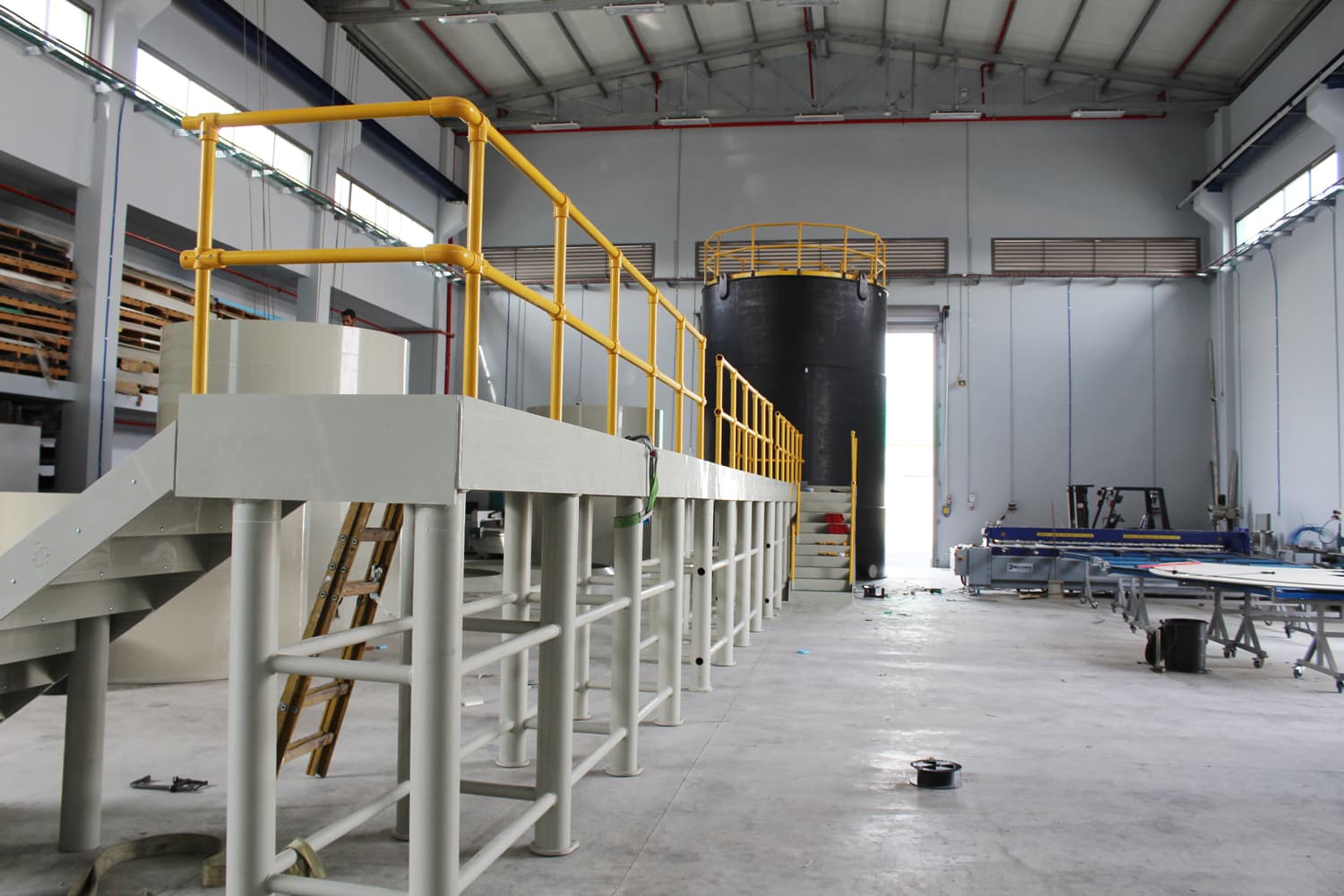


Over the last decade, the industrial landscape has undergone a dramatic shift in construction materials. The transition from traditional metals (such as stainless steels and even superalloys like Hastelloy) to advanced engineering polymers has gained immense momentum. This trend is particularly evident in the most aggressive process industries: chemical and petrochemical, semiconductor manufacturing, desalination and water treatment, and the energy sector.
This shift is not coincidental but based on a distinct engineering need. When dealing with highly corrosive chemicals (such as hydrochloric, sulfuric, or hydrofluoric acid), metallic solutions fail over time or require expensive maintenance. The ability to combine exceptional inherent chemical resistance with low specific gravity and high mechanical machinability makes engineering plastic the preferred raw material for critical applications.
Our company specializes in engineering, manufacturing, and advanced CNC machining of large-scale plates, rods, blocks, and tubes from thermoplastic and composite materials. We are not just a "workshop"; we are an engineering execution arm, combining a deep understanding of materials science with advanced manufacturing technologies to provide components with engineering precision and a quality standard adapted to the customer's most stringent requirements.
The Challenge in Machining Engineering Plastic: Beyond "Simple"
There is a misconception that machining plastic is "easier" than machining metal. In reality, precise CNC machining of polymers poses unique challenges requiring specific expertise. Unlike metal, plastic has low thermal conductivity and high sensitivity to temperature. Using inappropriate cutting tools or incorrect speeds will lead to material overheating, local melting, plastic deformation (Warpage), and stress release that impairs the final dimensions of the part. Our expertise lies in managing the machining process - from selecting diamond/carbide tools, through cooling strategies, to clamping methods - to ensure a precise and dimensionally stable part.
Raw Materials: Molecular Adaptation to Machining and Environmental Challenges
We machine a wide spectrum of materials, adapting the machining strategy to the thermal and mechanical characteristics of each polymer:
- PP (Polypropylene): The main workhorse for the chemical industry due to good resistance to acids and bases and excellent cost-effectiveness.Machining Challenge: PP is a "soft" material that tends to produce long chips and "burrs" at cutting edges. We use extra-sharp cutting tools and high speeds to achieve a clean, smooth surface finish, critical for preventing contamination buildup.
- HDPE (High-Density Polyethylene): Excels in abrasion resistance, zero water absorption, and structural flexibility, making it ideal for outdoor applications and equipment bases.Machining Challenge: Due to its flexibility, HDPE tends to chatter during heavy milling. We implement creative clamping techniques and use cutters with geometry specifically designed for soft materials.
- PVDF (Polyvinylidene Fluoride / Kynar®): The "high-end" material for extreme environments. Offers high thermal resistance (up to 140°C continuous use) and extremely broad chemical resistance, including halogens and strong oxidizing agents.Machining Challenge: A rigid, expensive, and thermally sensitive material. Its machining requires an ultra-clean environment (to prevent contamination in the semiconductor industry) and precise cooling to prevent changing material properties during cutting.
- PVC / CPVC: Rigid materials with excellent chemical resistance, widely used in manufacturing piping fittings, valves, and connectors in the traditional industry and water treatment.Machining Challenge: Materials that are comfortable to machine, allowing for excellent surface finishes and very high precision in fine threaded connections.
- FRP (Fiber-Reinforced Plastic): Composite materials (glass fiber reinforced plastic) provide exceptional structural strength-to-weight ratios. Ideal for constructions, walkways, and environments with high mechanical stress.Machining Challenge: The material is highly abrasive to machining tools and requires the use of diamond tools (PCD) and efficient dust extraction systems.
Engineering Comparison Table for Machining Applications:
| Polymer Type | Typical Machining Application | Chemical Resistance | Dimensional Stability in Machining | Sensitivity to Machining Temperature |
| HDPE | Bund bases, large covers | Good | Medium-Low | Medium |
| PP | Process accessories, flanges, and pump housings | Excellent (Acids/Bases) | Medium | Medium-High |
| PVDF | Scrubber nozzles, critical components, sensors | Outstanding (inc. Oxidizers) | High | Very High |
| PVC | Piping fittings, valves, threads | Very Good | High | Low |
Large Scale Machining Capabilities
One of our significant relative advantages is the ability to handle components with exceptional dimensions, providing solutions for heavy industrial facilities and large process equipment:
Giant Plate and Slab Machining (CNC Milling)
Our machining center is equipped with CNC portal milling machines with work tables allowing the processing of plates up to maximum dimensions of 3X1.5 meters and high weights. This capability is critical from an engineering perspective: it allows us to manufacture large, complex components as a single piece ("Monoblock") from a solid plate, without the need for unnecessary connections or welds. A monolithic component is always stronger, more reliable, less prone to failure than a component fabricated from several parts joined together.
Machining of Rods, Blocks, and Tubes (CNC Turning)
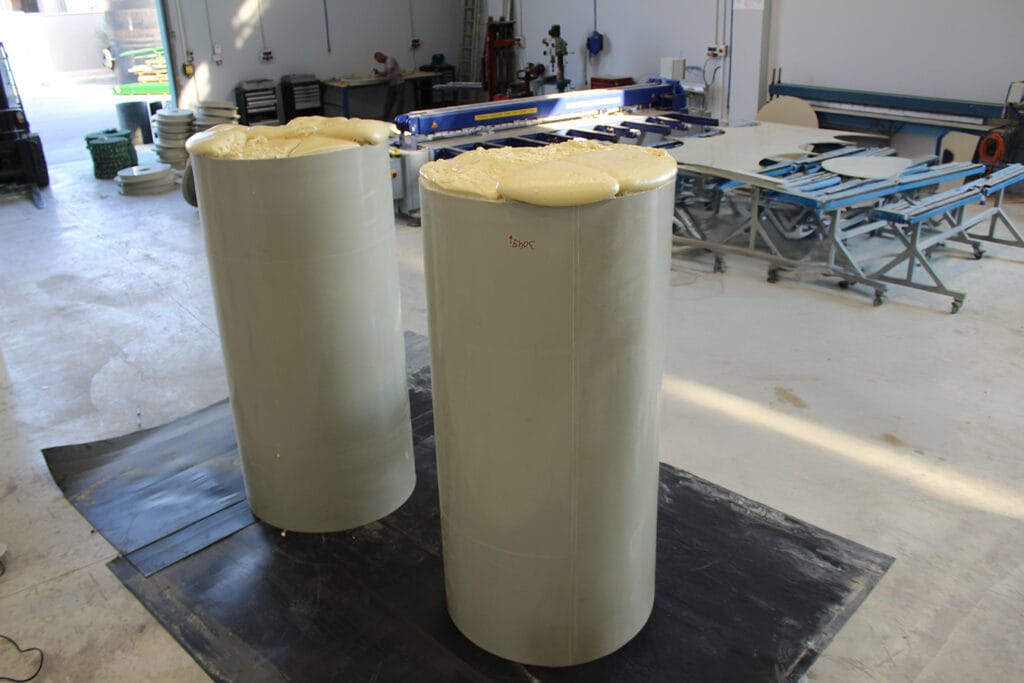
Our turning department can handle rods and tubes up to a diameter of 400 mm. Turning at such diameters in plastic materials requires high skill, particularly in managing heat evacuation and chip removal, to prevent distortion of the final diameter. We ensure adherence to tight tolerances (down to hundredths of a millimeter) even in these large sizes, for manufacturing huge flanges, pistons, and valve bodies.
Engineering Solutions and Ancillary Products for Industry
The products we manufacture in the CNC department are divided into two main categories, providing a comprehensive solution for the supply chain in the process industry:
1. Critical Accessories for Piping Systems and Tanks
As an integral part of the value chain for manufacturing storage tanks and conveyance systems, we produce all necessary interfaces with high precision:
- Special Flanges: Manufacturing standard flanges (according to DIN, ANSI B16.5 standards) or custom-dimension flanges for piping connections, manholes, and instrument connections. We ensure excellent surface finish in the gasket area for perfect sealing, and precise Weld Prep for connection to the tank body.
- Connectors, Adapters, and End Fittings: Manufacturing accessories adapted to various thread types (NPT, BSP) and connections (Camlock, Unions) existing in the market.
- Baffles and Static Mixers: Design and machining of internal components installed inside tanks and reactors, intended to improve liquid mixing and prevent unwanted vortexing.
2. Complex Engineering Components for Process Equipment
Beyond standard accessories, we provide full Turnkey solutions for the core of process equipment:
- Internal Components for Scrubbers: Scrubber efficiency depends on the precision of its internal components. We manufacture multi-drilled packing support plates and machine complex spray nozzles from PVDF or PP, ensuring uniform and precise spray distribution of the neutralizing liquid.
- Pump Housings and Valve Bodies: CNC machining of complex mechanical assemblies (Manifolds, Pump Housings) from solid plastic blocks, requiring high geometric precision, leak-tightness between internal passages, and excellent surface finish.
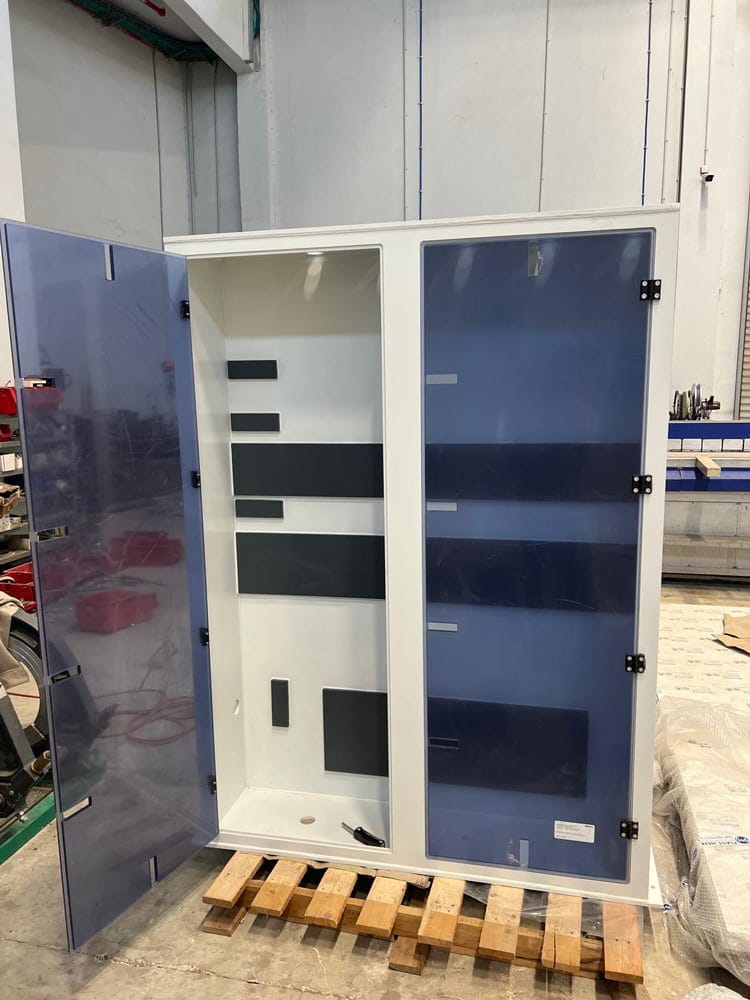
- Corrosion-Resistant Control and Operation Cabinets: Manufacturing enclosures and panels via CNC machining from plastic materials, protecting sensitive electronic instrumentation (HMI, PLC) in environments saturated with corrosive fumes.
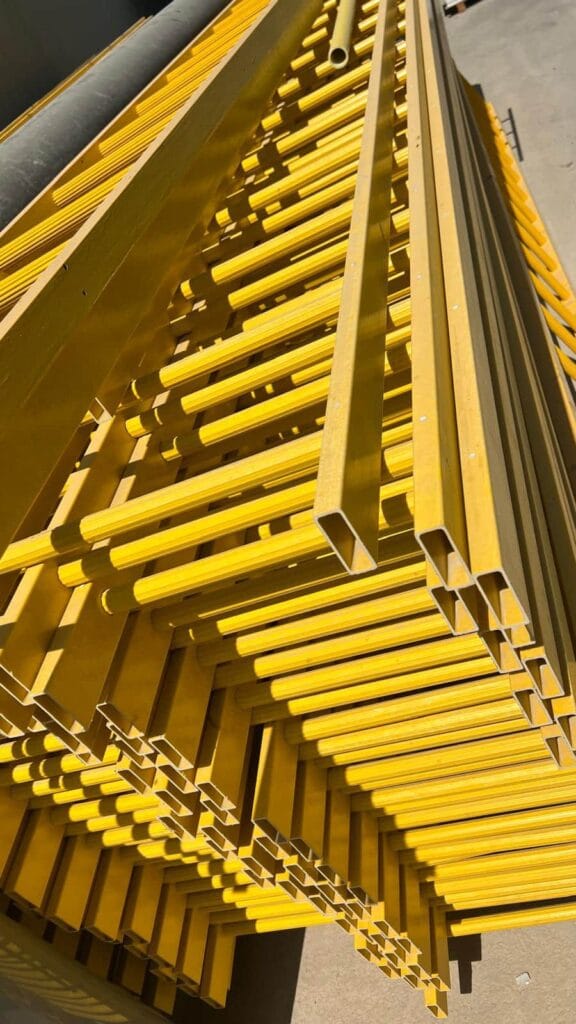
- Safety and Access Solutions (Grating): Machining and customization of walkways, stairs, and ladders from composite materials (FRP) that do not rust, have an anti-slip surface, and require no maintenance or painting.
Workflow and Quality Control (QA/QC)
We operate under an ISO 9001:2015 certified quality management system. Our production process is structured to ensure repeatability and precision:
- Product File Intake: Working directly with customer 3D files (STEP, IGES) and 2D drawings.
- Process Planning (CAD/CAM): Programming toolpaths while selecting strategies that ensure minimum stress on the material.
- Production and Process Control: Performing machining while constantly monitoring dimensions.
- Final Quality Control: Using precise measuring tools, and if necessary, a Coordinate Measuring Machine (CMM), to verify compliance with geometric tolerances and surface finish requirements (Ra). We provide inspection reports (COC/COA) upon request.
Why Choose Plast-Hen's CNC Machining Services?
- Deep Material Understanding: Our knowledge doesn't end with operating the machine, but in understanding polymer behavior. We know how to prevent distortions and thermal stresses in the material.
- Engineering Precision and Large Scale Capabilities: A rare combination of the ability to machine small, precise parts alongside the ability to handle giant plates and tubes.
- Full Integration (One-Stop-Shop): Our biggest advantage is the ability to manufacture both the tank/facility and the accompanying machined components under one roof. This ensures perfect fit-up between parts, especially in preparation for welding, and saves the customer from dealing with multiple suppliers.
We invite you to challenge us with complex engineering drawings, unique material requirements, and projects with tight schedules. Our experience in plastic machining is your peace of mind in facility operation.