



A Complete Guide to Fuel and Diesel Containment Basins
Material Selection, Legal Requirements for Internal Fueling Stations, Generator Basins, and Agricultural Diesel Farms
Fuel storage is a field with unique requirements that are not always obvious, even to experienced engineers. Fuel is not an aggressive chemical in the classic sense - it does not attack plastic the way sulfuric acid does, and it does not burn through material like a strong base. But it has its own behavior that shapes how a containment basin must be designed - it gives off vapors, it is absorbed into the plastic over time, it requires specific protection against static and fire, and it falls under its own regulatory regime that does not fully overlap with that of other hazardous materials.
This article covers everything you need to know about fuel containment basins - which fuel is being stored, which basin material suits it, where the differences lie between diesel, gasoline, and fuel oil, and what the specific regulatory requirements are for internal fueling stations, generators, and agricultural diesel storage. The general side of containment basin design is covered in a separate guide on how to choose an industrial containment basin, and the general regulatory side in an article on containment basin regulations in Israel.
Fuel Is Not a Chemical - How a Hydrocarbon Liquid Behaves
Before choosing a basin material, it helps to understand what we are dealing with. Industrial fuels are hydrocarbon mixtures - molecules of carbon and hydrogen in chains of varying length. Diesel is a mixture of C9-C22 molecules, gasoline is lighter (C5-C10), and fuel oil is heavier. These differences affect not only how the fuel burns but also how it behaves against the basin's construction materials.
Hydrocarbons fall into two groups in terms of how they behave toward plastic:
Aliphatic hydrocarbons (the straight chains) make up most of diesel and fuel oil. They are less aggressive, and in most cases, plastics such as high-density polyethylene (HDPE) and polypropylene (PP) hold up well against them over the long term.
Aromatic hydrocarbons (benzene, toluene, xylene) are a different story. They are more aggressive, cause plastics to swell, and prolonged storage can lead to cracking. Gasoline contains 15-40% aromatic hydrocarbons, diesel contains roughly 15-40% as well, and fuel oil and heavier fuels have a different percentage.
What does this mean in practice? HDPE is an excellent fit for diesel, fuel oil, and heavy fuels. For gasoline, it is less ideal, and storage duration needs careful thought. For fuels with high aromatic content, there are additional considerations we will discuss below.
Which Basin Material Suits Which Fuel
HDPE - the Standard Choice for Diesel
For diesel storage and most aliphatic fuels, HDPE is the accepted industry choice. It offers excellent resistance to aliphatic hydrocarbons at room and moderate temperatures, near-zero water absorption, and long-term stability. In Israeli agriculture, diesel farms use HDPE basins in volumes that can reach tens of cubic meters, and they perform for decades without trouble.
Another advantage of HDPE is its resistance to outdoor conditions - UV radiation (with UV-stabilized grades), high summer temperatures, and high humidity. For basins installed in open agricultural settings, this matters.
PP - an Alternative for Diesel and Lubricating Oils
PP is also resistant to diesel, and it has a few specific advantages over HDPE: a higher operating temperature (up to 80 degrees Celsius versus 60 for HDPE) and slightly higher mechanical strength. For diesel storage at elevated temperatures, or for basins exposed to abrasion and mechanical loads, PP can be preferable.
For lubricating oils and engine oils, PP is the common choice. It performs excellently in mineral and synthetic oils and does not absorb them over time.
FRP - for Very Large Volumes
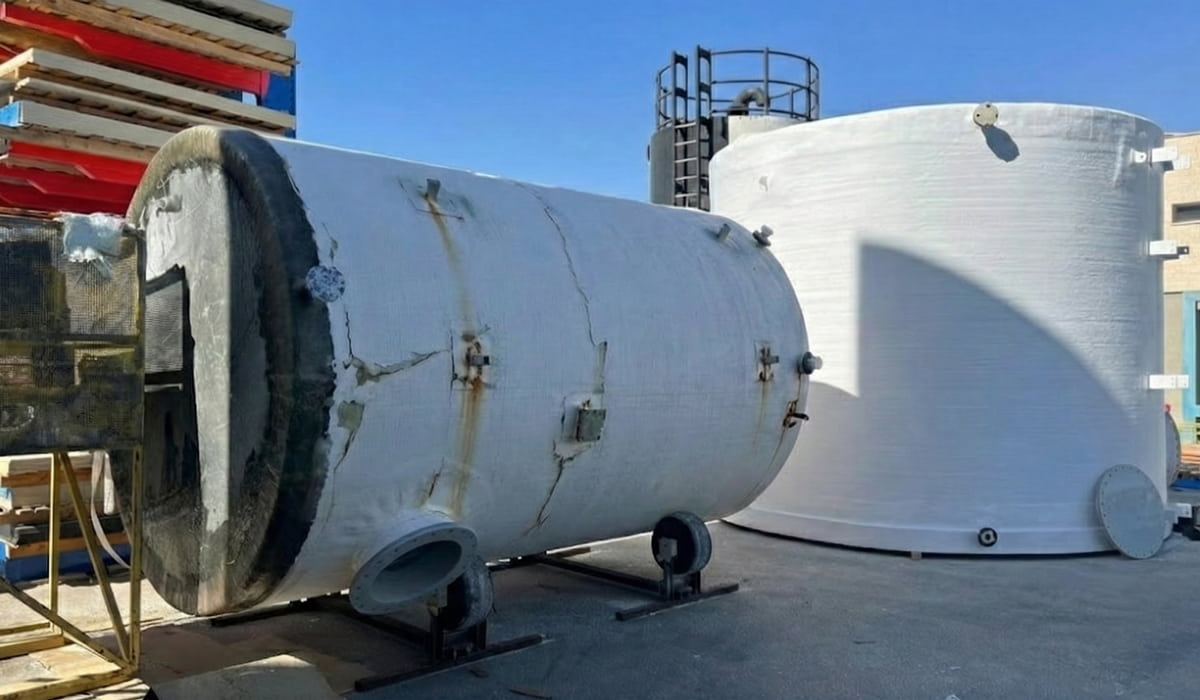
Fiberglass (FRP) is used mainly when the required volumes exceed what is efficient to produce in standard HDPE - basins of 30-100 cubic meters, or basins with special structural requirements. At industrial fuel depots, FRP basins are common for storing large volumes of diesel and fuel oil.
A key advantage of FRP is full custom fabrication - basins can be designed in any shape, size, and level of complexity, including integration with control and metering systems.
Metal Basins - Still a Niche Option
For fuels, metal basins (carbon steel or stainless steel) remain a legitimate option, mainly at large public fueling stations with a dedicated corrosion-management program. The main drawback is maintenance - steel needs internal coatings that wear over the years and require periodic repair. It is also significantly heavier than plastic, which complicates installation and transport.
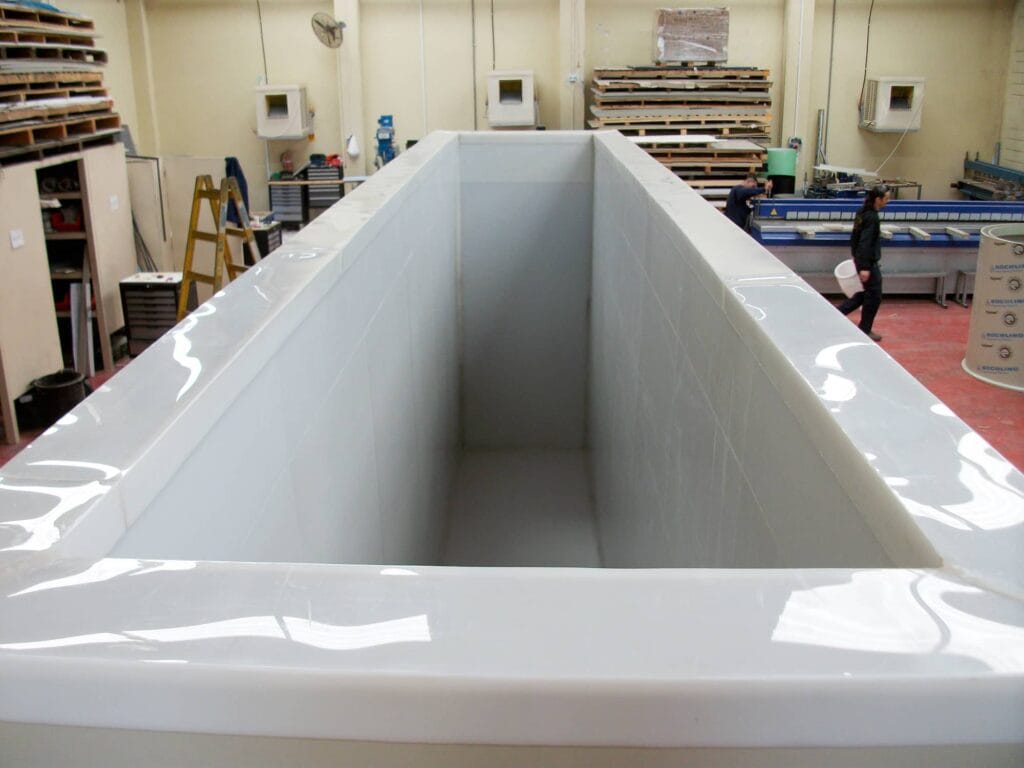
For small and medium projects, custom thermoplastic containment basins offer a better balance of cost, service life, and ease of installation.
Internal Fueling Station - Definition and Requirements
Israeli regulation distinguishes between a public fueling station (serving the general public) and an internal fueling station (for an organization's own consumption). An internal fueling station is defined under the Business Licensing Regulations (Petroleum Storage) as a petroleum storage site for fueling vehicles for self-consumption, in a quantity not exceeding 100 cubic meters. Above 100 m³, it is classified as a public fueling station, with stricter requirements.
When does an organization need an internal fueling station? The common cases:
A large vehicle fleet. Transport companies, construction firms with trucks, plants with forklifts, and utility vehicles. Rather than sending the fleet out for external fueling, a station is set up at the facility itself.
Construction sites and remote projects. Large construction sites, projects in the Negev, and infrastructure works - all require fuel available on site.
Large generators. Hospitals, data centers, and critical industrial plants all need significant diesel storage as emergency backup.
Agriculture. Large farms, dairies, and orchards all maintain diesel reserves for their agricultural equipment.
Each of these cases requires a compliant containment basin. The requirements include a volume of 110% of the largest tank (the same as for other hazardous materials), but there are also fuel-specific requirements - drain ports with valves operable from outside, minimum distances between adjacent tanks, and clearance from fences and structures that allows free movement for fire-fighting vehicles.
A Generator Basin - a Case Every Plant Knows
The generator is the most common case of fuel storage at industrial facilities, and sometimes the most regulatorily neglected. A typical backup generator at a hospital, data center, or critical plant can hold from 1,000 liters to 20,000 liters of diesel, and sometimes more.
The important point: a generator is also a fuel storage subject to regulation. A containment basin is required, a toxic permit is required above the relevant threshold, and the facility must meet all the requirements of the petroleum storage regulations.
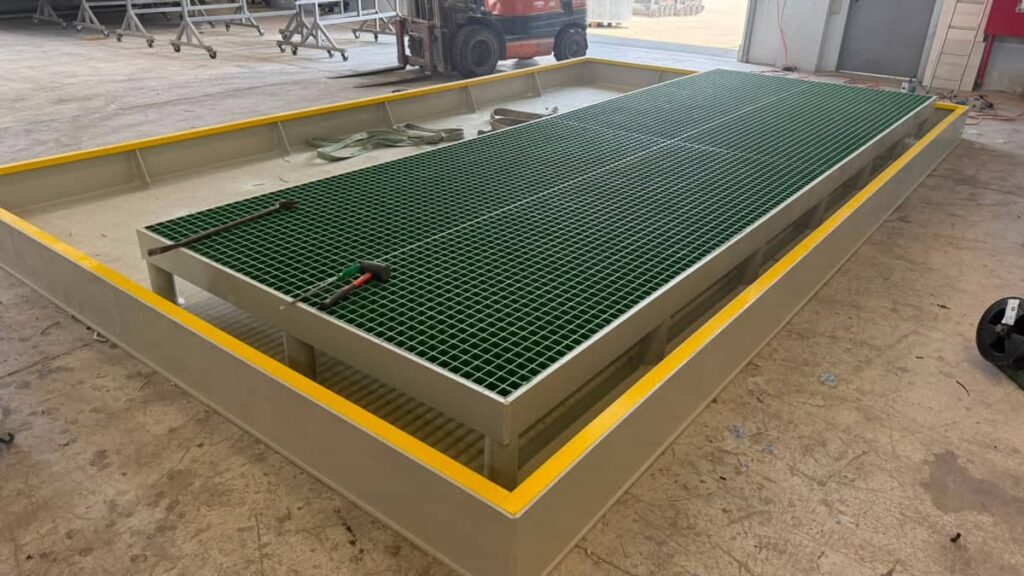
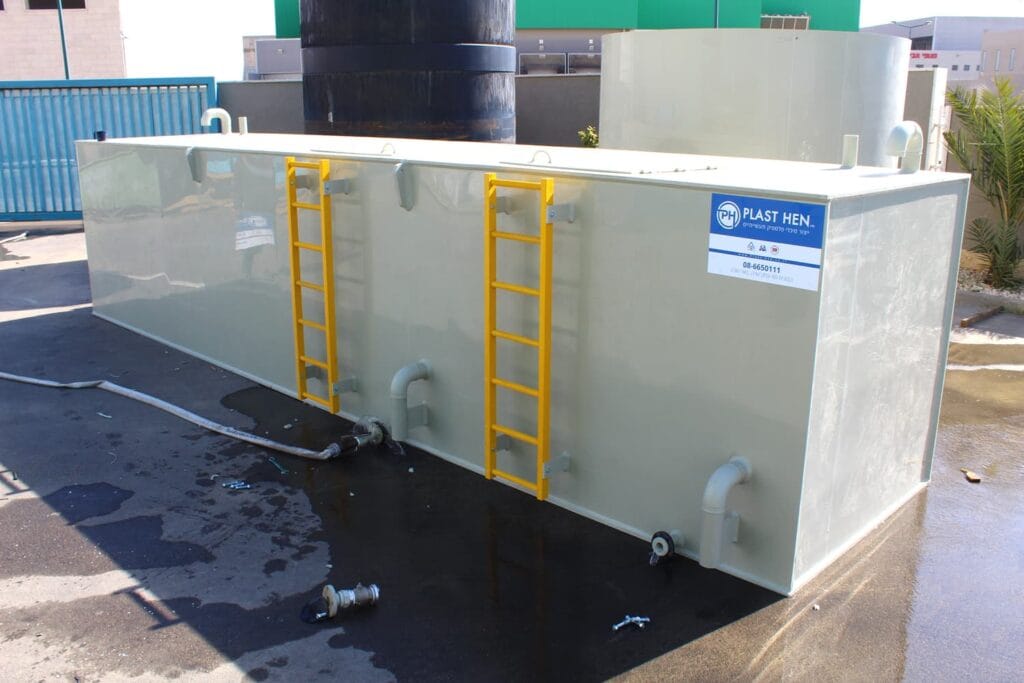
For a standard generator, an HDPE basin sized to 110% of the main tank, with a cover that prevents rainwater accumulation, a leak sensor connected to the control system, and a closed drain valve, is the standard configuration. The leak-sensor requirement becomes especially critical with generators, because they are often located in places no one enters daily - generator rooms, rooftops, basements. A slow, undetected leak can seep for months without anyone noticing.
Agricultural Diesel Farms - Unique Considerations
In Israeli agriculture - mainly in moshavim, kibbutzim, and large farms - the diesel reserve is an integral part of the facility. It serves tractors, harvesting machinery, irrigation pumps, and equipment that cannot wait for external fueling.
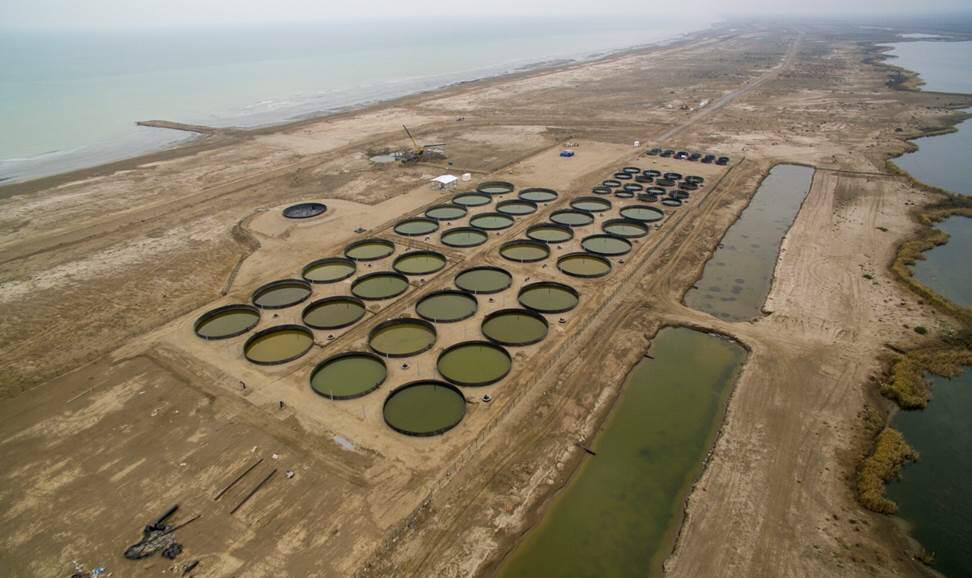
Agricultural basins differ from industrial ones in several respects. First, they are usually outdoors rather than inside an enclosed structure, which increases exposure to UV radiation and rainwater. Second, they are often larger than typical industrial storage - large farms can store 20-50 cubic meters of diesel. Third, the environment is less controlled - animals, dust, insects, and sometimes unauthorized people can reach the area.
Practical recommendations for agricultural farms:
A thicker-walled HDPE basin with UV protection, which adds years of service life under outdoor conditions. A full cover is a must, both to keep out rainwater and to protect against dust and contamination. A drain valve with a lock, so no one opens it by mistake. Clear warning signage in both Hebrew and Arabic. And a fence that prevents unauthorized access.
Piezometers and Leak Testing - a Requirement for Fueling Stations
The Water Regulations of 1997 require piezometers at fueling stations with underground tanks - monitoring wells that make it possible to check whether fuel has seeped toward the groundwater. This requirement applies mainly to public fueling stations, but internal stations with underground tanks are covered by it as well.
The key point for choosing a basin: a leak test at installation is a legal requirement. Fuel cannot be introduced into a new facility until it has passed a leak test proving it is sealed. In thermoplastic basins, the leak test is performed at the factory before delivery, and again on site at installation.
This is one of the reasons that working with an experienced manufacturer such as Plast Hen matters, especially for fuel basins - the leak-test documentation is part of the records required when the facility is commissioned, and it must be available in case of an inspection.
Fire and Static Safety Considerations
Fuels are flammable materials, and that changes the picture compared with non-flammable hazardous materials. The Israeli classification under the Business Licensing Regulations divides fuels by flash point:
- Petroleum Class A - flash point up to 20 degrees Celsius (gasoline, light solvents)
- Petroleum Class B - between 20 and 55 degrees (diesel, kerosene)
- Petroleum Class C - above 55 degrees (fuel oil, lubricating oils)
The more severe the classification, the stricter the requirements.
A point unique to plastic in fuel basins: static charge buildup. When fuel flows through plastic, an electrical charge can accumulate that may lead to ignition. In plastic basins for Class A fuels (gasoline), grounding and anti-static measures are required. For diesel and fuel oil basins, the risk is significantly lower, thanks to the higher flash points.
Safety distances are also a legal requirement. Between adjacent fuel tanks, a distance of at least half the sum of the diameters is required, and between a basin and a fence or structure, a distance that allows free movement for fire-fighting vehicles.
Examples from the Field
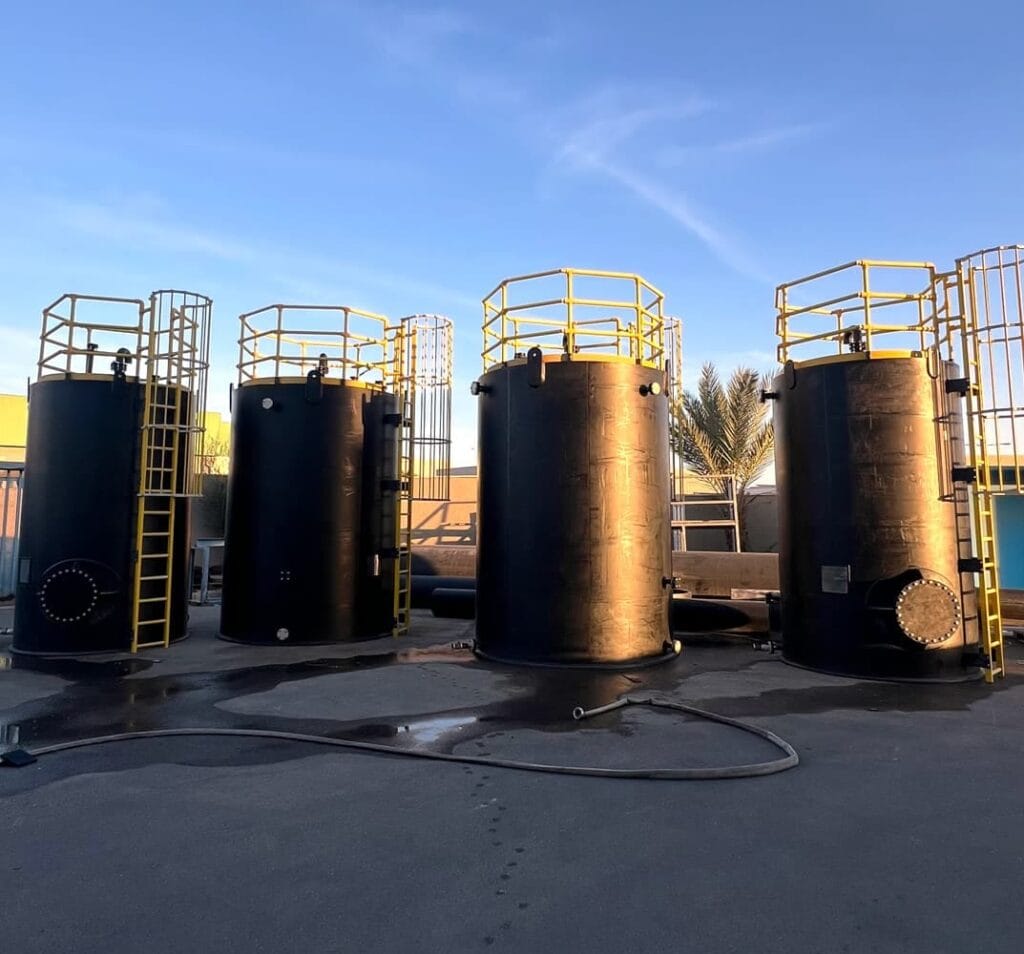
At industrial fuel depots in central and southern Israel, HDPE basins of 30-80 cubic meters for diesel storage serve the fueling of large operational fleets. The standard configuration: one basin for several tanks, a full cover, leak sensors connected to a central monitoring system, and a drain valve with a lock.
At data centers and large hospitals, smaller HDPE basins (2-15 cubic meters) serve generator tanks. Here, the emphasis is on speed of installation - so as not to disrupt facility operations - and on long-term reliability that does not require frequent maintenance.
In the agriculture of the Negev and the Arava, thicker-walled basins with UV protection perform for decades under extreme conditions. Experience accumulated across a range of projects in Israeli industry - from chemical plants in the Negev to agricultural diesel farms in the Arava - contributes to understanding what works in each application.
Summary
Choosing a fuel containment basin is more than finding a durable material. You need to understand the type of fuel (aliphatic or aromatic, flash-point classification), the environment (indoors or outdoors, agricultural or industrial), and the specific regulation (internal fueling station, generator, storage farm).
In short: HDPE for most diesel, fuel oil, and lubricating oil applications. PP when a higher operating temperature or greater mechanical strength is needed. FRP for very large volumes. And in every case, strict attention to the 110% volume, a leak sensor, a cover, and compliance with the Business Licensing Regulations (Petroleum Storage) and the Water Regulations.
Investing in a quality basin with proper design pays off over the years. Fuel that leaks into the ground creates groundwater contamination whose remediation costs a fortune, and legal liability that can be devastating for the plant and its officeholders.