



A pool overflow channel, also known as a perimeter gutter, is the engineering element that turns a regular swimming pool into a zero-edge or infinity pool. The channel runs around the top edge of the pool, collects water that overflows the rim, and routes it through a drainage system to a balance tank, from which it returns to the pool after filtration and disinfection. The result is a constant water level, continuous removal of floating debris, and the visual effect where the waterline merges with the surrounding deck.
At Plast Hen, we've been manufacturing these components, including the channel itself, the gratings that cover it, and the balance tank, for nearly three decades. This guide covers what matters before designing a pool with an overflow channel: how it works in practice, when it makes sense and when it doesn't, what material to use, and what questions to ask your architect or contractor before construction starts.
How a Pool Overflow Channel Works
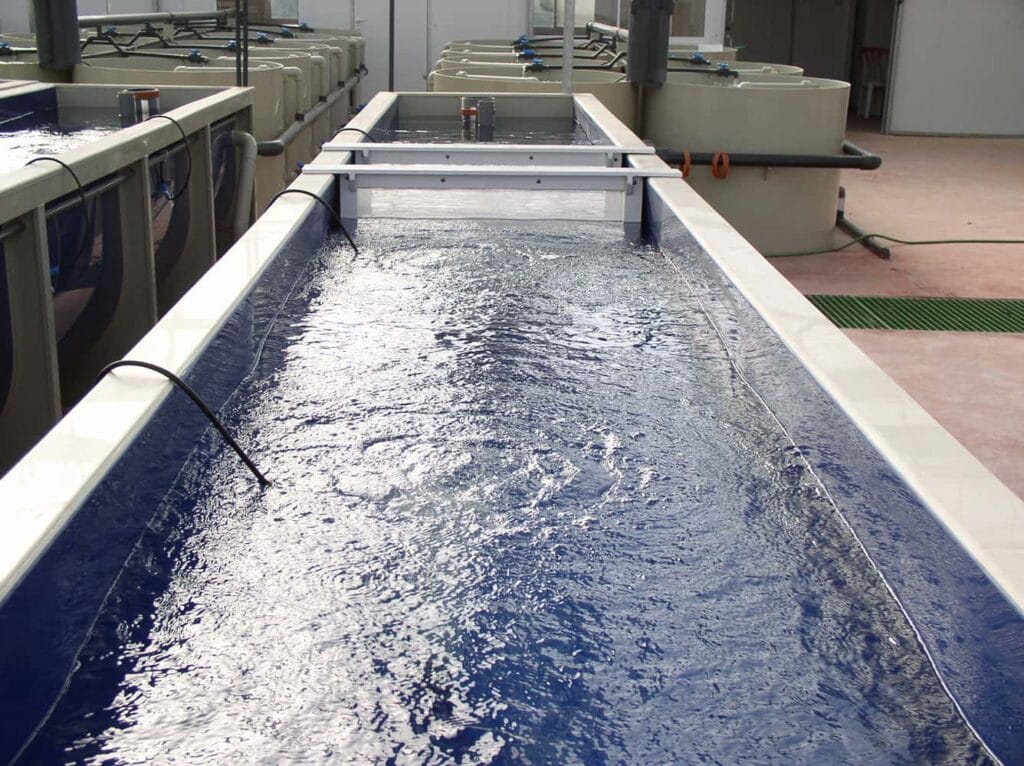
The principle is straightforward. The water level in the pool sits higher than usual - it reaches the edge of the deck, not 10 to 15 cm below it. Any movement of water, whether a swimmer entering, waves from a current jet, or even strong wind, causes some water to rise above the edge and overflow into the perimeter channel running around the pool. From there, gravity pulls the water down into a balance tank in the equipment room, and a pump draws it through the filter and back into the pool through return inlets at the bottom.
This loop runs continuously, not in cycles like a skimmer pool. That's the practical difference, and the rest of the advantages flow from it. Body oils, sunscreen, and leaves that float on the surface get carried into the channel rather than staying in the pool. The water level remains constant even with ten people swimming. And the zero-edge appearance creates the visual signature that has become standard in luxury pool design.
It's worth being direct about something: a pool with an overflow channel is a more complex system. More components, more maintenance points, more electricity consumption. In return, you get noticeably better water quality and a pool that looks fundamentally different. Whether the trade-off is worth it depends on the project.
Skimmer or Overflow Pool: The Real Decision
We see clients wrestling with this choice all the time, and it usually comes down to three practical factors: what you're willing to spend, what look you want, and how much water quality matters to you.
In a skimmer pool, the water level sits about 10 to 15 cm below the rim. The skimmers are openings in the pool wall through which water enters the filtration system. It's a closed loop where the same water circulates, with evaporation as the only loss. Cheaper to build, simpler to maintain, and adequate for most residential pools.
In an overflow pool, the water reaches the edge. You need an additional balance tank, a more complex piping system, and a larger equipment room. Construction cost runs significantly higher (typically 20 to 50% more than a comparable skimmer pool), and the electricity bill at the end of the month doesn't compare either. In return, you get superior water quality, a luxury appearance, and compliance with stricter standards. For commercial pools, there's no real choice. Public health regulations require water quality standards that can practically only be achieved with overflow channels, which is why every hotel pool, spa, fitness club, and municipal facility uses the perimeter channel design.
Types of Pool Overflow Channels
The visual character of an overflow channel changes dramatically by design type, and each comes with hidden trade-offs worth knowing about.
A concealed overflow channel is the type you'll see in most private pools. The channel itself sits hidden under a grating, and on top of the grating goes a stone or paver matching the surrounding deck. From the pool deck, you see continuous paving with a thin line where the water overflows almost invisibly. Clean, classic, and the least problematic to design. The downside is some water loss that needs to be compensated for by an automatic refill system.
A vanishing-edge channel is what you specify for pools overlooking a view, whether facing the sea, a valley, or a city skyline. Water spills over an exposed rim into a wider catch channel. Visually, this is the most striking option. Hydraulically, it's also the most complex: if calculations are off, either the channel floods or the visual effect doesn't work. These calculations have to be done carefully, not estimated.
Multi-stone channels, in two-stone or three-stone configurations, take a different approach. In a three-stone arrangement, the front stone is submerged in water, the middle stone is the grating, and the rear stone is part of the deck. This handles water loss better, but the look is less minimalist. Suits high-traffic projects more than a private home, aiming for a clean line.
Each type has the physical channel itself, a U-shaped profile embedded in the pool walls, and the grating that covers it. Most gratings on the market are made from polypropylene (PP) with UV protection or rigid PVC, in standard widths of 19 to 25 cm. The choice between PP and PVC depends on pool conditions: in pools with high chlorine levels or aggressive treatments, PP holds up better long-term, while PVC offers better stiffness and mechanical durability.
Materials for Overflow Channels and Balance Tanks
This is the chapter contractors won't discuss with you, which is exactly why it matters. The material your channel and tank are made from determines whether the system lasts ten years or thirty.
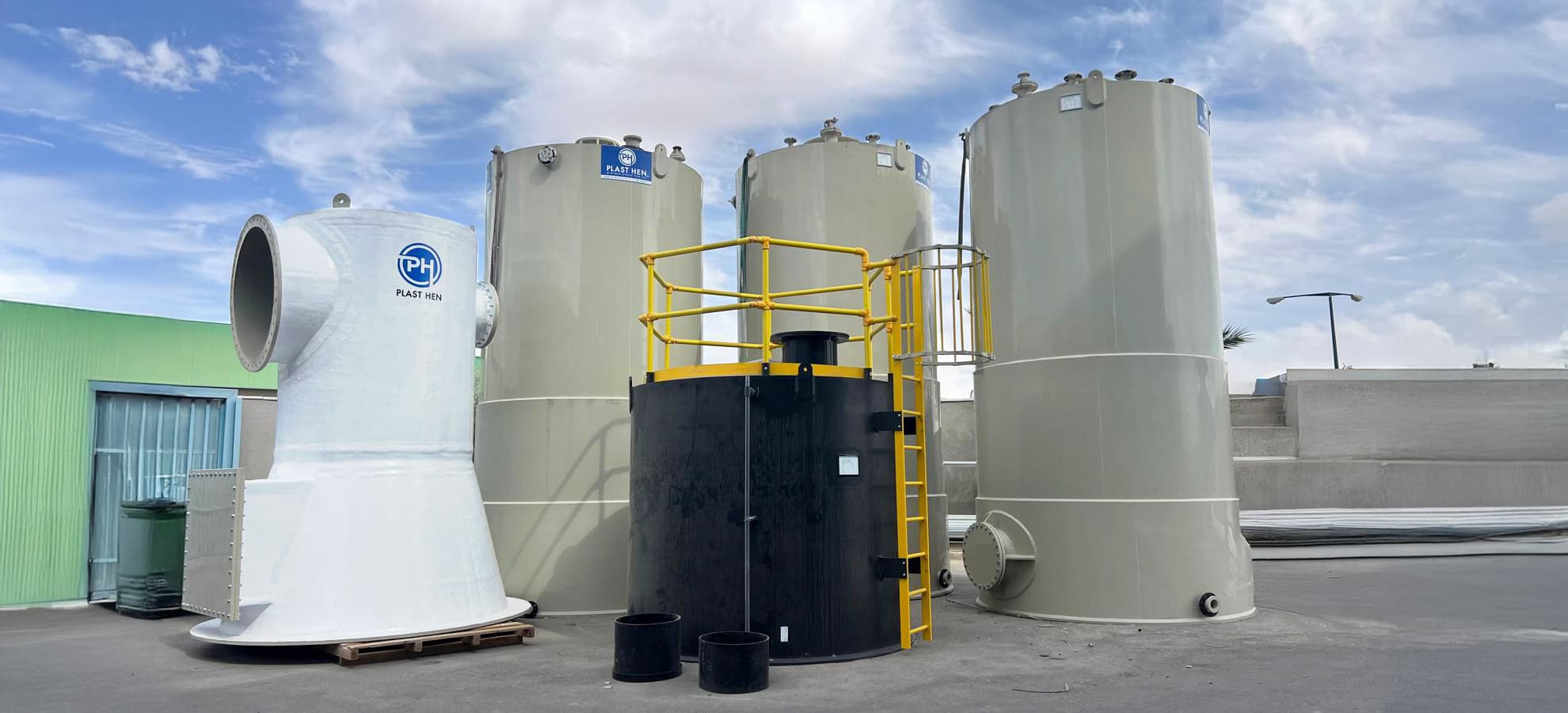
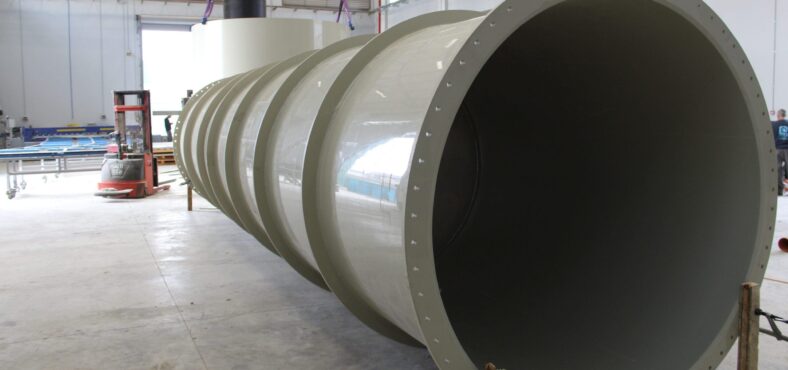
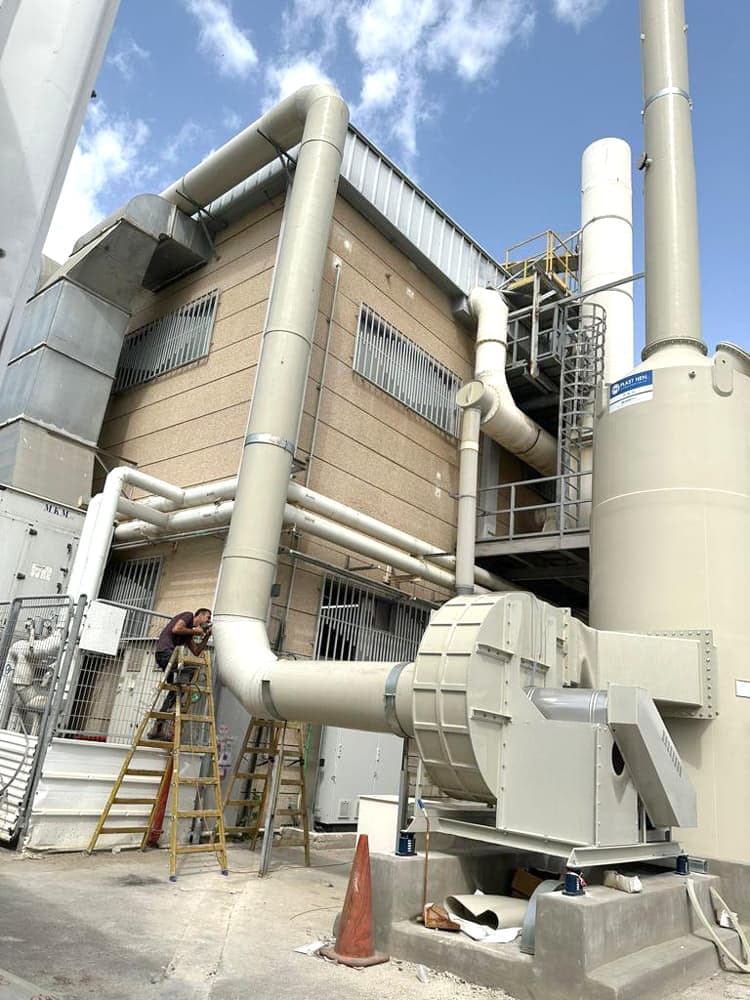
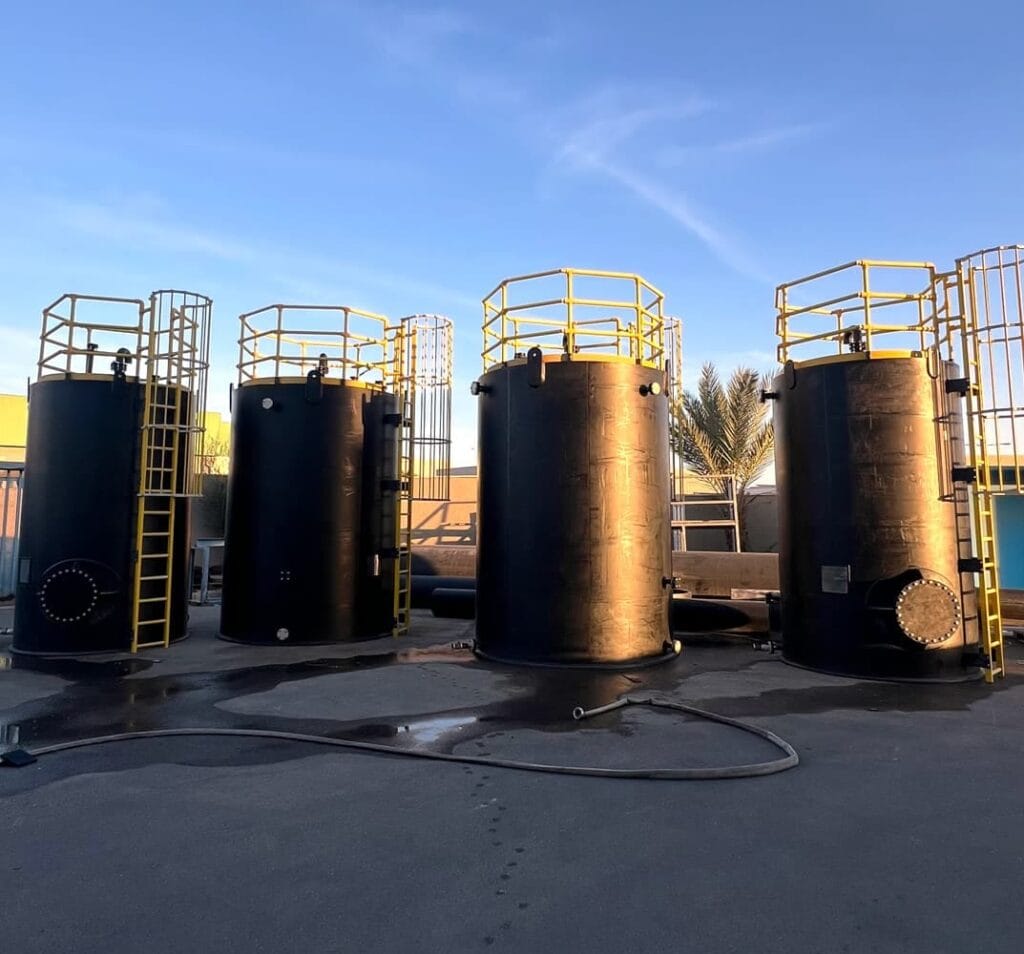
Polypropylene (PP) is the standard choice for professional projects. The material resists chlorine, bromine, caustic soda, and almost any disinfectant chemical you can think of. It can be welded to DVS 2205 standard for full-seal connections without adhesives or mechanical fasteners, meaning that after welding, the system becomes one continuous piece. PP piping, PP channels, and PP balance tanks form a homogeneous system that behaves as a single unit over time. For hotels, spas, and public pools, this is what we manufacture at Plast Hen.
Rigid PVC is cheaper, stiffer, and easier to fabricate, which is why it's especially common for gratings and rigid components. The downside is that PVC doesn't tolerate high temperatures well (above about 60°C it starts to deform) and can become brittle in very cold weather. In a typical residential pool, it lasts for years, but for hot spas or covered pools with aggressive disinfection, PP is the better call.
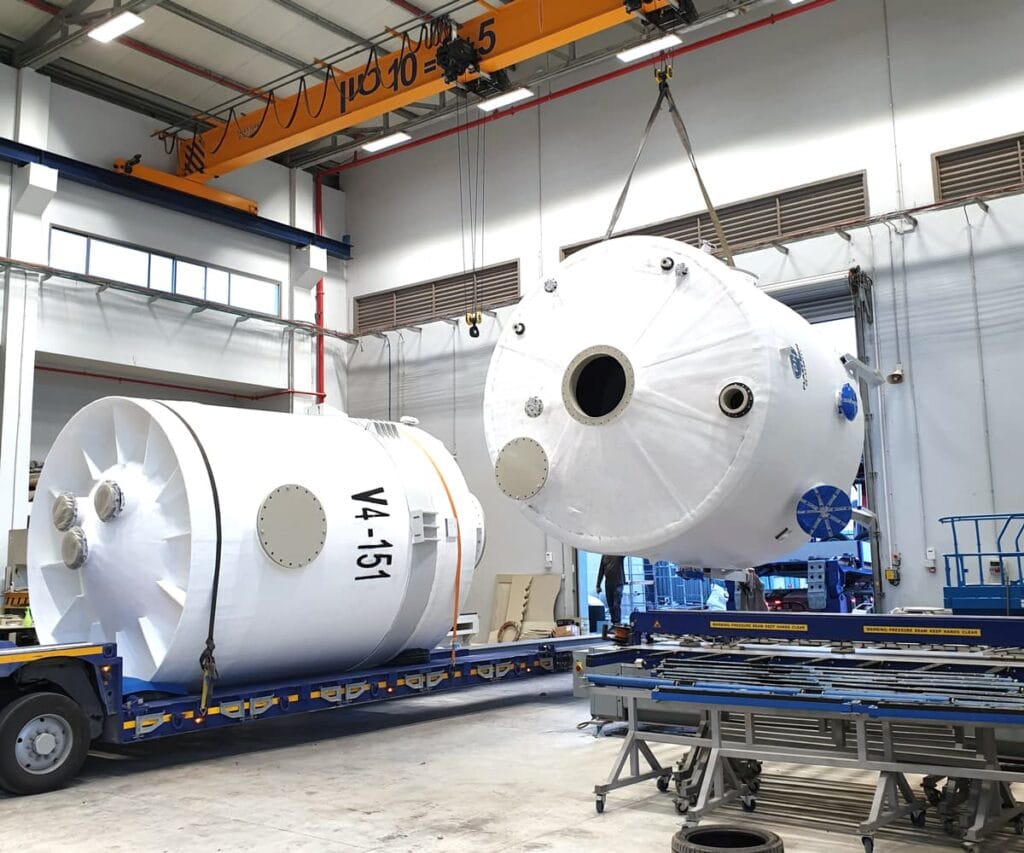
Fiberglass (FRP) is a different story. In fully prefabricated pools, the channel isn't a component you connect; it's part of the shell itself. Our residential fiberglass pools are an example of an integrated overflow system: the pool walls, channel, and zero edge come from the factory as a single laminated unit with no joints. The same principle applies to our fiberglass pools for industrial and public projects. No connection points means no points that can leak.
The connection between the channel and the piping system runs through piping sized correctly for the flow rate. This is a place that demands proper design: if the piping is too narrow, water will flood the channel because it has nowhere to go. We've seen this mistake in pools already built, and fixing it after the deck is sealed is a headache nobody wants.
Balance Tank: The Component Nobody Sees But Everything Depends On
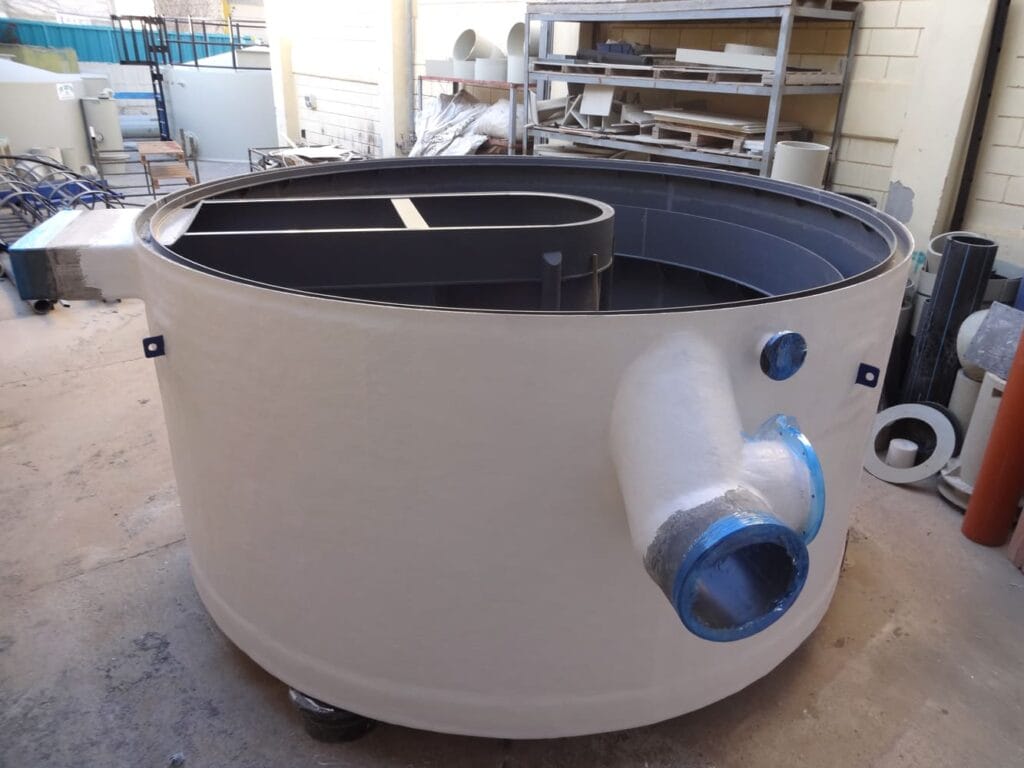
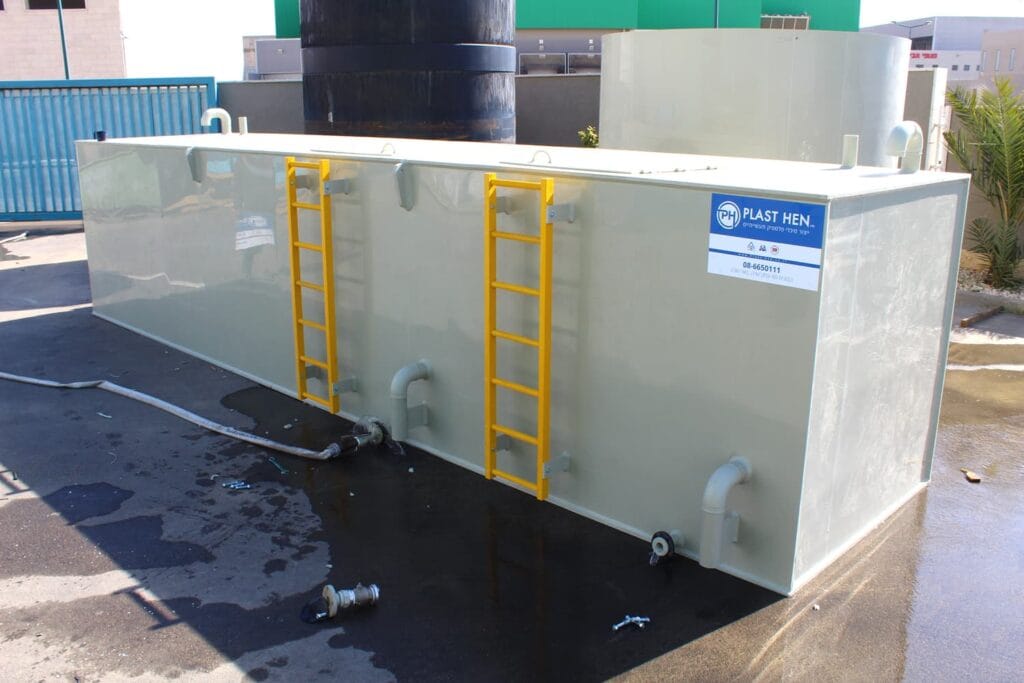
The balance tank, sometimes called a compensation tank or catch basin, is essentially a sealed tank in the equipment room that water from the channel flows into. It serves three roles, each one critical. First, it absorbs everything that varies: swimmers entering and leaving, evaporation, sudden rain. Second, it prevents air from entering the pump, and air in the filter can burn out a motor. Third, it acts as a hydraulic reserve, allowing the pump to run continuously even when channel flow varies.
Balance tank volume typically ranges between 5% and 8% of the pool volume. A 50 cubic meter residential pool needs a tank of 2.5 to 4 cubic meters. Sounds like a small detail, but in practice, it means allocating equipment room space at the initial design stage, since adding it later is nearly impossible. The tank is usually placed in the equipment room with a separate top opening that prevents water from entering the building, even in the case of overflow. A polypropylene balance tank built professionally lasts decades without significant wear. We're still maintaining tanks we manufactured in the 1990s that work exactly like the day they were installed.
Pool Overflow Channel Detail: Key Design Considerations
If you're an architect or engineer designing a pool overflow channel detail, these are the parameters that need to be on the table before drawing starts.
The first parameter is the water flow rate. The channel has to handle the entire filtration flow without flooding. In a typical residential pool, that's 15 to 30 cubic meters per hour, which translates to a channel with an internal width of at least 15 to 20 cm with proper slopes leading to drainage outlets. Too narrow causes flooding. Too wide wastes water unnecessarily.
The second is noise. This is what clients discover after construction is complete. An overflow channel produces continuous flow noise, which most of the time is a pleasant background sound, but in quiet evenings or near rest areas, it can become disruptive. Noise can be reduced through proper design of overflow openings (wider openings mean slower fall, which means quieter), acoustic solutions at the bottom of the channel, and tight sealing of the balance tank. In boutique hotel projects we've worked on, noise was the first parameter we discussed.
The third is access for maintenance. The channel itself is passive, but its drainage outlets need to stay clean. Leaves, hair, and debris collect there. The grating must lift out easily. The balance tank's drainage outlets must be reachable. If the pool is designed without thinking about this, maintenance will require massive disassembly within a few years.

Common Mistakes in Overflow Channel Design
We've seen the same four mistakes show up repeatedly, and each one has a solution if caught in time.
The first is incorrect pipe sizing. Piping that's too narrow between the channel and the balance tank creates a hydraulic restriction, and water will flood the channel during peak flow. Sizing PP piping correctly for the required flow is something to calculate, not estimate.
The second is an undersized balance tank. Either an inaccurate calculation or a budget decision to reduce volume leads to the tank emptying during peak load and the pump starting to draw air. This compounds the first mistake if the piping is already on the edge.
The third is ignoring acoustics. An overflow channel produces continuous flow noise, and in most projects, it's a pleasant background. But on a quiet night near a rest area, it can become a problem, and after the deck is sealed, there's nothing to do about it.
The fourth is designing without maintenance access. A grating that doesn't lift out, hidden drainage points, and a balance tank with no service hatch. Within two years, there's a problem you can't fix without massive disassembly, and pool owners get repair quotes that hurt.
Prefabricated Pool with Overflow Channel: A Different Game
A prefabricated pool is one manufactured at the factory and delivered to the installation site as a complete unit. In a prefabricated fiberglass pool with an integrated overflow channel, the channel is part of the shell, not a separate component to connect. That changes everything.
In a traditional concrete overflow pool, still considered the standard in many markets, you build the shell, then build the channel as a concrete profile, then pour, then seal, then finish, and hope all the connection points hold. We're not against concrete; there are projects where concrete is the right choice, especially pools in non-standard sizes or complex shapes. But every connection point is one that can leak in a decade.
In a polypropylene or fiberglass pool that we manufacture, the channel comes integrated. So do the handrails, return inlets, and drainage system. Installation takes days instead of months, the finish is uniform, and there are no internal connection points. The trade-off is more limited design flexibility: a concrete pool can be any shape, while a prefabricated pool has dimensional limits. For most residential projects and a significant portion of commercial work, those limits aren't material.
Standards and Regulations for Public Pools
Public pools operate under different regulatory frameworks depending on jurisdiction, but the principles are consistent worldwide. Continuous filtration is required, disinfection is required, and daily water quality monitoring is required. In practice, these standards can't be met without overflow channels. The continuous removal of contaminants from the surface is what enables the bacteriological levels regulations require. Additional standards relevant to overflow channel design include grating safety standards (gap dimensions that prevent finger entrapment or hair entanglement), accessibility standards, and electrical safety standards for pumping systems.
Designing a public pool also requires coordination with local authorities, sanitary engineering approval, and ongoing operational testing. Manufacturing of thermoplastic components for these projects should follow DVS 2205 industrial welding standard. This is a field we've been operating in for 30 years, with the certifications and experience to manufacture systems that pass inspection.
How Much Does It Cost
You won't find specific numbers here, and it's not because there's something to hide. Pool overflow channel cost varies by many parameters: pool perimeter (channel length), raw material, grating type, balance tank volume, piping system complexity, and required excavation depth. What can be said with certainty is that a pool with an overflow channel is significantly more expensive than the same pool with skimmers, typically 20 to 50% more. The premium is worth it for projects where water quality and appearance are central considerations, less so for a basic residential pool.
Routine maintenance costs run similarly to skimmer systems, though electricity consumption is higher. The key is that the system gets designed correctly from the start: a balance tank with an appropriate volume, piping with the correct diameter, and a channel from a suitable material. If everything's done right, the system runs for decades without major issues. If corners get cut, there's a chance you'll pay the difference twice within a decade.
Routine Maintenance of Overflow Channels
An overflow channel is a passive component, but not a maintenance-free one. Leaves, hair, oils, and debris accumulate at the drainage outlets and in the strainers before the pump, and they need to be removed before they restrict flow.
For a residential pool the routine is fairly simple. Surface cleaning of the grating once a week, flushing the drainage outlets once a month, and opening the balance tank for thorough inspection once a year, including checking level sensors, cleaning sediment from the bottom, and verifying that strainers are clean. For a public pool running continuously, the schedule is tighter, and per public health regulations, daily water testing is also required.
A properly functioning disinfection system, whether chlorine, bromine, or salt chlorination, extends the service life of all plastic components by preventing biofilm formation in the channel and tank. In a project designed correctly from the start, maintenance takes about an hour a week with a thorough annual inspection, no more.
Want to Discuss a Specific Project?
If you've made it this far and have a real project in mind, whether a private home, hotel, spa, or public pool, let's talk. The Plast Hen team will work with you from the design stage of the channel and balance tank, through selection of the right material for your pool conditions, to manufacturing and on-site installation. Send us your project details, including pool size, project type (residential, commercial, or public), and your timeline, and we'll come back with a tailored solution.