



What is PVDF?
PVDF (Polyvinylidene Fluoride) is a high-performance semi-crystalline thermoplastic fluoropolymer. Its chemical formula is (C2H2F2)n, where the polymer chain consists of repeating vinylidene fluoride units. The molecular structure contains alternating CH2 and CF2 groups, giving the material a unique combination of properties.
The material was first developed by DuPont in 1948, and commercial production began in the early 1960s under the Kynar brand. Kawai's discovery of its piezoelectric properties in 1969 opened a new era of sensor and actuator applications. Today PVDF is the second most produced fluoropolymer after PTFE, with demand growing steadily due to development in battery, water treatment, and solar energy industries. The world's leading manufacturers are Arkema (Kynar and Kynar Flex brands), Solvay (Solef and Hylar brands), Georg Fischer (SYGEF brand), and Kureha (KF brand).
Manufacturing Process
PVDF production occurs through Free Radical Polymerization from the vinylidene fluoride (VDF) monomer, a colorless and odorless gas. The polymerization process takes place under controlled temperature and pressure conditions inside a reaction vessel.
Polymerization conditions: Temperature ranges from 30 to 150 degrees Celsius, and pressure from 4 to 10 megapascals (40-100 atmospheres). High pressure is required to keep the gaseous monomer in a liquid state and enable efficient reaction. Peroxides or azo compounds that decompose into free radicals and initiate the polymerization chain are used as initiators.
Polymerization methods: Three main methods exist. Suspension polymerization produces relatively large granules suitable for extrusion and injection molding. Emulsion polymerization produces finer particles, ideal for coatings and batteries. Solution polymerization is used for special applications. Each method produces PVDF with slightly different characteristics.
Material processing: After polymerization, the resulting resin undergoes drying and granulation. The granules are fed into extrusion or injection machines to produce piping, sheets, films, and finished products. PVDF can also be processed from solution in polar solvents such as NMP or DMF, enabling the creation of coatings and membranes.
Crystalline Structure and Phases
PVDF is a semi-crystalline polymer with a typical crystallinity of 50-60%, although the overall range can vary from 35% to 70% depending on processing conditions and manufacturing method. The dual structure - crystalline regions alongside amorphous regions - gives the material a balance between mechanical strength and flexibility.
Five crystalline phases: PVDF has five known crystalline phases, designated α, β, γ, δ, and ε. Each phase is characterized by a different arrangement of molecular chains. The most common phase under normal conditions is α (alpha), but the most technologically important phase is β (beta).
Beta phase and piezoelectric properties: In the β phase, all electric dipoles point in the same direction, giving the material strong piezoelectric, pyroelectric, and ferroelectric properties. Transition to the β phase is achieved through mechanical stretching, exposure to high electric field, or combination of both. PVDF films in β phase respond to mechanical pressure by generating electric charge, and vice versa.
Physical and Thermal Properties
| Property | Value | Notes |
|---|---|---|
| Density | 1.77-1.78 g/cm³ | |
| Melting Point | 170-177°C | |
| Glass Transition Temperature (Tg) | -35°C | |
| Continuous Service Temperature | -40 to 150°C | |
| Piping Service Temperature | Up to 120°C | Under pressure |
| Decomposition Temperature | Above 316°C | |
| Tensile Strength | 50-60 MPa | |
| Elastic Modulus | 2,000-2,500 MPa | |
| Elongation at Break | 300-400% | |
| Shore D Hardness | 75-80 | |
| Water Absorption | Less than 0.04% | |
| Limiting Oxygen Index (LOI) | 44% | |
| Dielectric Constant | 8-10 | High for polymer |
| Piezoelectric Coefficient d33 | 20-33 pm/V | In β phase |
Thermal stability: PVDF maintains its mechanical and chemical properties over a wide temperature range. Above 316°C, decomposition begins with the release of hydrogen fluoride (HF). In fire, the material self-extinguishes and meets UL94 V-0 without flame-retardant additives.
Purity: PVDF is a pure polymer requiring no UV stabilizers, plasticizers, lubricants or other additives. This purity is essential for semiconductor, pharmaceutical, and ultra-pure water applications.
Chemical Resistance
PVDF exhibits excellent resistance to most industrial chemicals, but its limitations must be understood.
| Chemical Group | Examples | Resistance | Notes |
|---|---|---|---|
| Mineral Acids | H2SO4 up to 98%, HCl, dilute HNO3, H3PO4 | ⭐⭐⭐⭐⭐ | Excellent even at high concentrations |
| Hydrofluoric Acid | HF at all concentrations | ⭐⭐⭐⭐⭐ | Significant advantage |
| Halogens | Wet and dry chlorine, bromine, iodine | ⭐⭐⭐⭐⭐ | Key PVDF advantage |
| Weak to Moderate Bases | NaOH up to 40%, KOH, ammonia | ⭐⭐⭐⭐⭐ | Up to pH 12-13.5 |
| Seawater and Salts | NaCl, sulfates, nitrates, chlorides | ⭐⭐⭐⭐⭐ | |
| Alcohols | Methanol, ethanol, isopropanol | ⭐⭐⭐⭐⭐ | |
| Aliphatic Hydrocarbons | Hexane, heptane, mineral oils | ⭐⭐⭐⭐ | |
| Halogenated Hydrocarbons | Chloroform, carbon tetrachloride | ⭐⭐⭐⭐ | Good resistance |
| Dilute Organic Acids | Acetic acid up to 20% | ⭐⭐⭐⭐ | |
| Oxidizing Agents | H2O2, ozone, chlorine compounds | ⭐⭐⭐⭐⭐ | |
| Ketones | Acetone, MEK, cyclohexanone | ⭐ | Not suitable |
| Esters | Ethyl acetate, butyl acetate | ⭐⭐ | Limited resistance |
| Amines | Ethanolamine, strong amines | ⭐ | Not suitable |
| Polar Solvents | DMF, DMSO, NMP | ⭐ | Dissolves the material |
PVDF Grades and Types
Homopolymer
PVDF homopolymer consists only of VDF units. It offers the highest mechanical strength and chemical resistance, but also the highest rigidity. Suitable for piping, tanks and applications requiring dimensional stability.
Copolymers
PVDF copolymers contain additional monomers in the polymer chain:
PVDF-HFP (with hexafluoropropylene) - Enhanced flexibility, low temperature resistance, suitable for flexible tubing and cable insulation.
PVDF-CTFE (with chlorotrifluoroethylene) - The most flexible copolymer, low shrinkage, suitable for applications requiring extreme flexibility.
PVDF-TrFE (with trifluoroethylene) - Enhanced piezoelectric properties, mainly used for sensors and actuators.
Special Grades
High purity grade - For the semiconductor and ultra-pure water industry. Undergoes strict quality control for particle and ion contamination.
Battery grade - Adapted for use as a binder in lithium-ion battery electrodes. Tailored molecular weight and distribution.
Coating grade - Fine granules for architectural and industrial coatings. UV resistance and gloss retention over the years.
Leading Manufacturers and Cost
Arkema is the world's largest PVDF manufacturer, with plants in the US, France, and China. Their Kynar and Kynar Flex brands are the most common in the industry. Solvay produces the Solef and Hylar brands, and Georg Fischer specializes in piping and fittings under the SYGEF brand. Kureha from Japan produces the KF brand.
In terms of cost, PVDF is significantly more expensive than standard thermoplastics like PP and HDPE (5-8 times), but less expensive than other fluoropolymers like PTFE and PFA. The higher cost is justified in applications requiring the unique combination of chemical resistance, thermal resistance, and special properties like piezoelectricity.
Piezoelectric Properties
The discovery of PVDF's piezoelectric properties in 1969 opened an entire field of applications. When PVDF in β phase is subjected to mechanical pressure, it generates electric charge (direct piezoelectric effect). Conversely, when an electric field is applied, the material changes shape (inverse piezoelectric effect).
Piezoelectric coefficient: PVDF's d33 coefficient ranges from 20-33 pm/V, with typical values around 20 pm/V. These values are lower than piezoelectric ceramics such as PZT (300-600 pm/V), but PVDF offers significant advantages of flexibility, low weight and lower cost.
Advantages over ceramics: PVDF offers mechanical flexibility enabling production of thin, flexible films, low weight (density 1.78 vs 7.5 g/cm³ in ceramics), and lower production cost using standard polymer methods. Additionally, PVDF has high bandwidth with fast response at high frequencies, and shock resistance - unlike brittle ceramics.
Industrial Applications
Chemical Industry
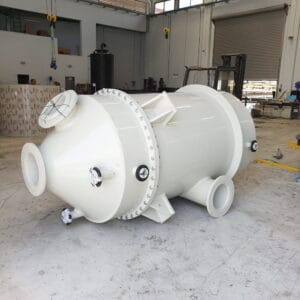
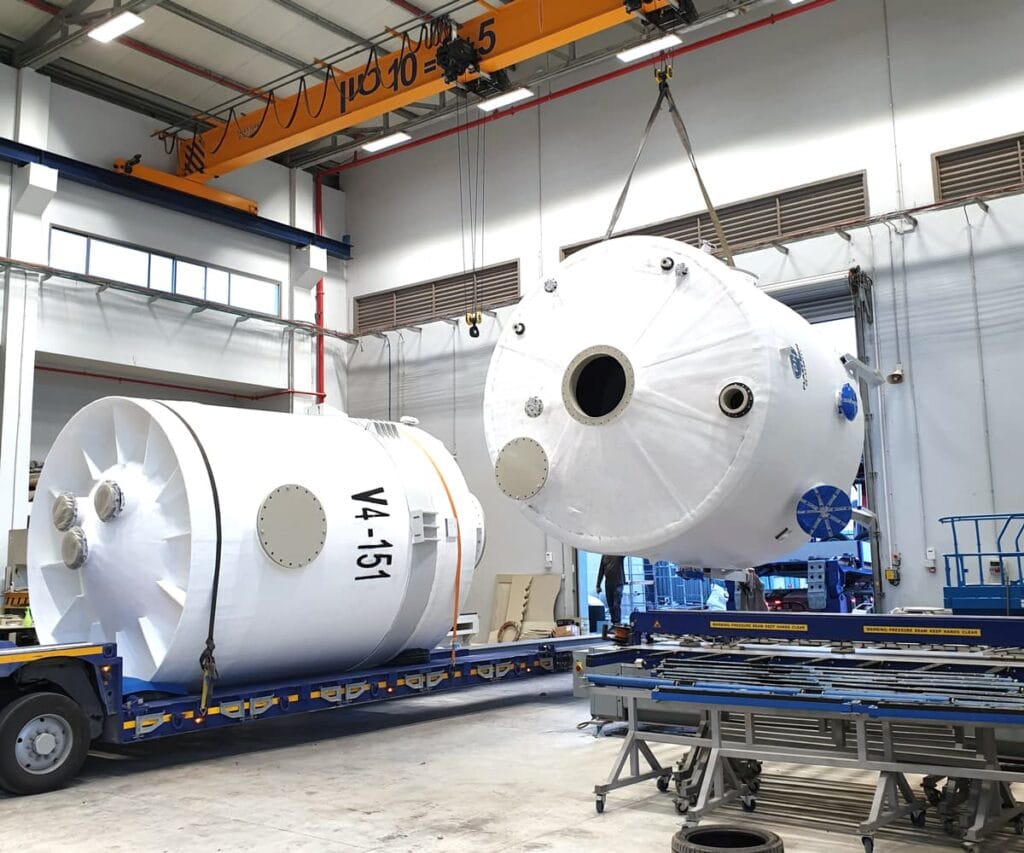
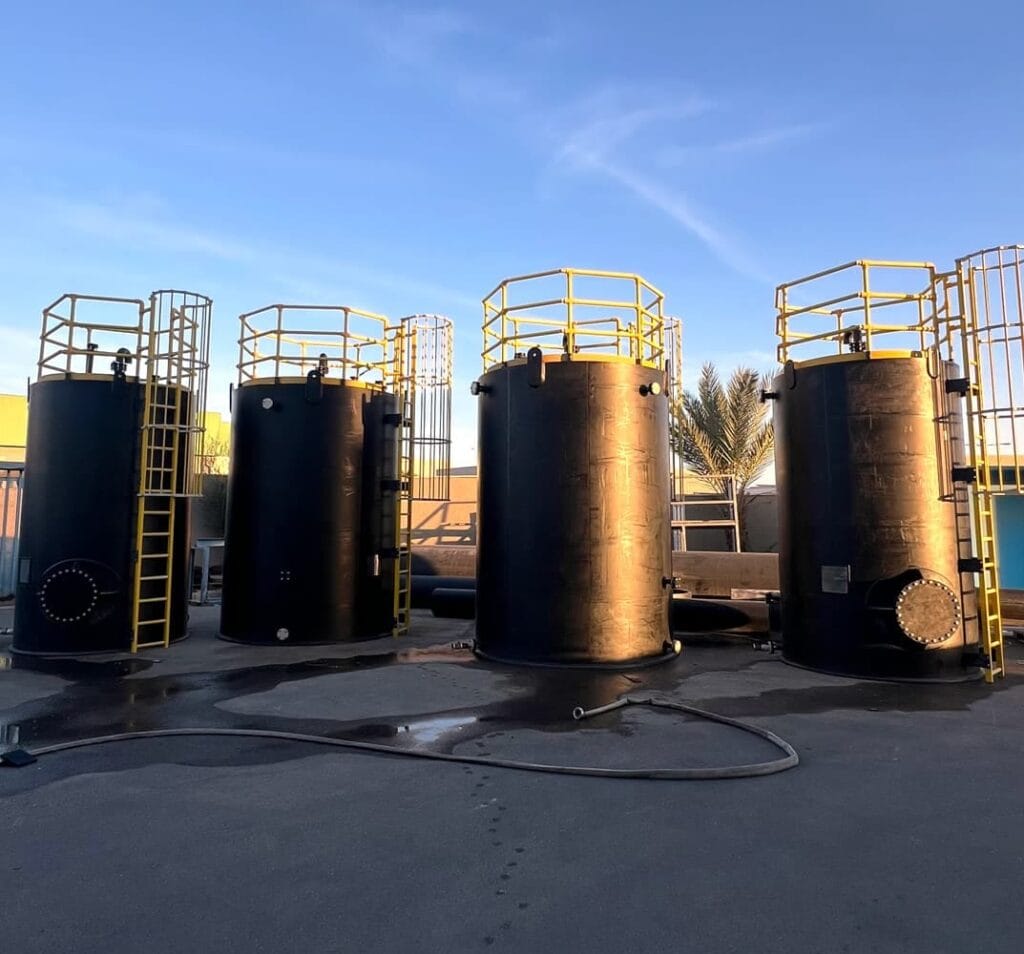
PVDF tanks are used for the storage and processing of corrosive chemicals at elevated temperatures. The ability to withstand halogens, strong acids, and oxidizing agents makes PVDF a preferred choice in chemical plants.
Specific applications: Storage tanks for concentrated sulfuric acid, wet chlorine, bromine solutions, and hydrofluoric acid. Piping for the transfer of corrosive chemicals at high temperatures. Valves, pump,s and fittings for process lines.
Water Industry
PVDF membranes have become the standard in the water treatment industry. The controlled porous structure enables efficient filtration of contaminants while allowing clean water passage.
Ultrafiltration (UF): PVDF membranes remove bacteria, viruses, and suspended solids from water. High chemical resistance enables aggressive cleaning and extends membrane life.
Hollow fiber membranes: Hollow Fiber technology uses thin PVDF fibers with pores in their walls. Water flows through the fiber wall, and contaminants remain outside. This method offers large filtration area in small volume.
Applications: Drinking water purification, industrial and municipal wastewater treatment, seawater desalination (as pretreatment), water for the food and beverage industry.
Energy - Lithium-Ion Batteries
PVDF plays a critical role in the battery industry as an electrode binder. Although it constitutes only 1-10% of electrode weight, its impact on battery performance is significant.
Mechanism of action: PVDF connects active material particles (such as lithium-cobalt-oxide in the cathode or graphite in the anode) to the metallic current collector. Bonds form through Van der Waals forces and hydrogen bonds between fluorine atoms and other particles.
Battery advantages: PVDF excels in electrochemical stability - resistance to oxidation in the cathode and reduction in the anode, along with complete chemical stability without reaction with the electrolyte. The material adheres well to aluminum (in cathode) and copper (in anode), and its solubility in NMP enables slurry preparation for electrode coating in the standard manufacturing process.
Separator coating: Beyond use as a binder, PVDF also serves to coat the separator between electrodes, improving thermal stability and preventing shorts.
Aerospace
PVDF's resistance to extreme conditions makes it a sought-after material in the aerospace industry.
Cable insulation: Kynar cables (trade name for PVDF) are common in aircraft and spacecraft. The combination of flexibility, low weight, heat resistance, and fire resistance meets stringent aviation requirements.
Structural Health Monitoring (SHM): Piezoelectric sensors from PVDF are embedded in wing and engine structures for real-time crack and damage detection. Flexibility enables adaptation to structural curvature.
Energy harvesting: Systems for harvesting energy from engine vibrations or airflow use PVDF to generate electricity for autonomous sensor operation.
Space applications: PVDF is used in instruments on space missions, including the cosmic dust counter on the New Horizons probe, measuring dust density outside the solar system.
Defense and Military
The defense industry leverages PVDF's unique properties in several areas:
Acoustic sensors: Hydrophones (underwater microphones) from PVDF are used for submarine detection, seabed mapping, and maritime activity monitoring. High sensitivity and marine environment resistance provide an advantage over ceramic technologies.
Pressure and vibration sensors: Systems for monitoring armored vehicle condition, impact detection, and artillery monitoring. Sensors detect microscopic pressure changes and provide real-time alerts.
Smart combat suits: Research and development of textiles integrated with PVDF sensors for monitoring fighter status - pulse, movement, and shock exposure.
Military electrical insulation: Cables and electronic systems in extreme field conditions, including high temperatures, humidit,y and chemical exposure.
Semiconductors
The chip industry demands extreme purity levels, and high-purity grade PVDF meets these requirements.
Ultra-pure water (UPW): PVDF piping (Georg Fischer's SYGEF Plus brand) is used for ultra-pure water transport in chip fabs. The material does not release ions or particles into the water.
Process chemicals: Tanks and piping for storage and transfer of electronics-grade chemicals - acids, bases, and solvents at high purity.
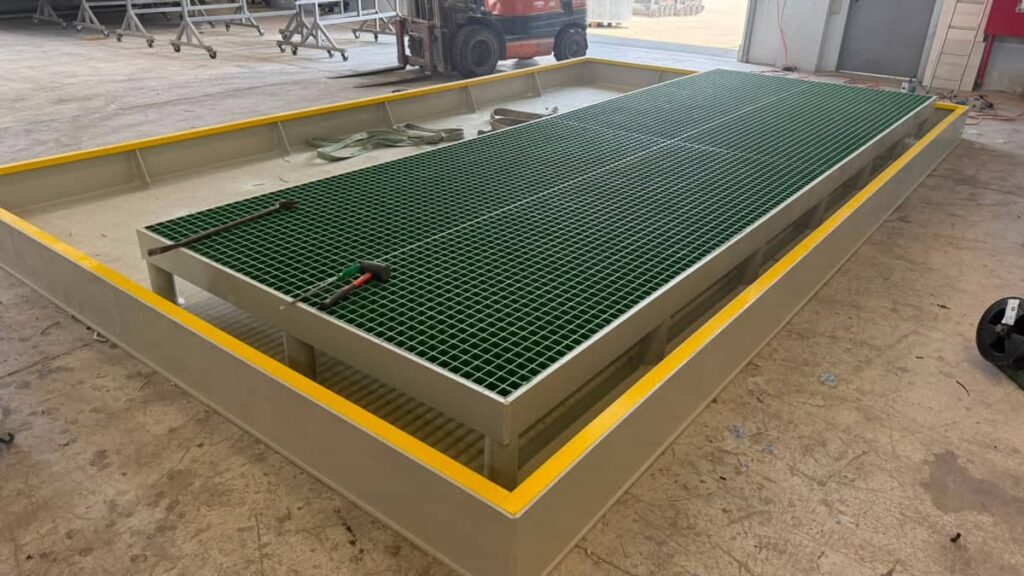
Process baths: PVDF baths for cleaning, etching, and wafer coating processes.
Solar Energy
PVDF is used in the photovoltaic industry as a protective coating for solar panels. Excellent UV resistance and transparency maintenance over decades of sun exposure make it an ideal material for this application.
PVDF/FRP Composite Tanks
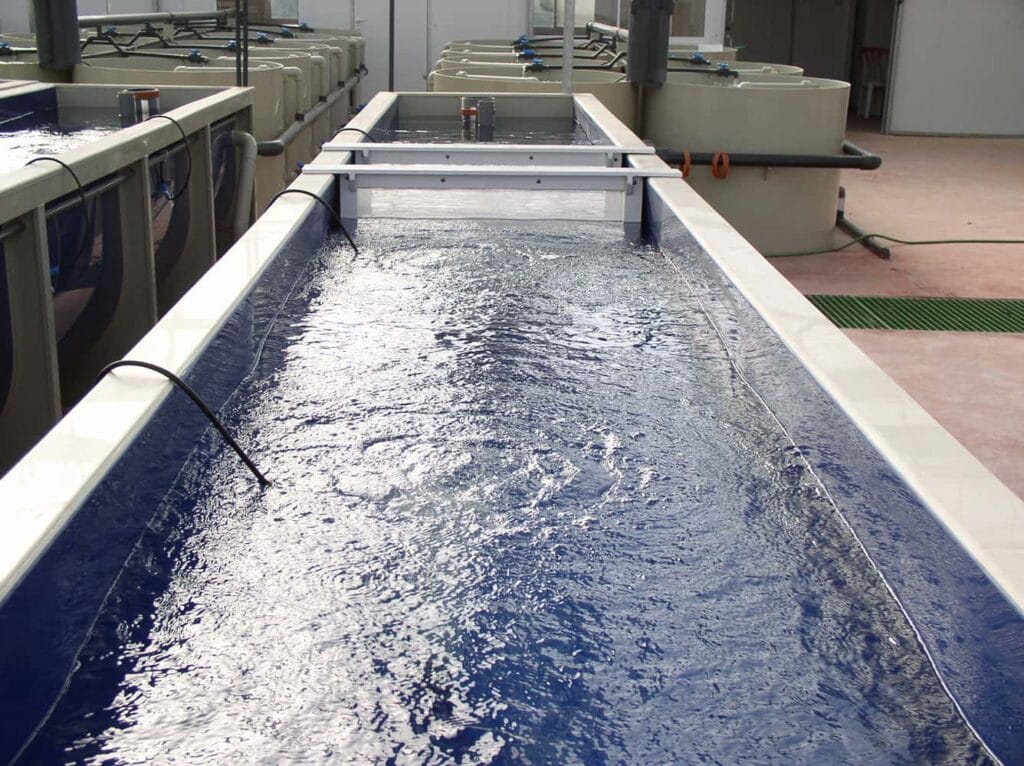
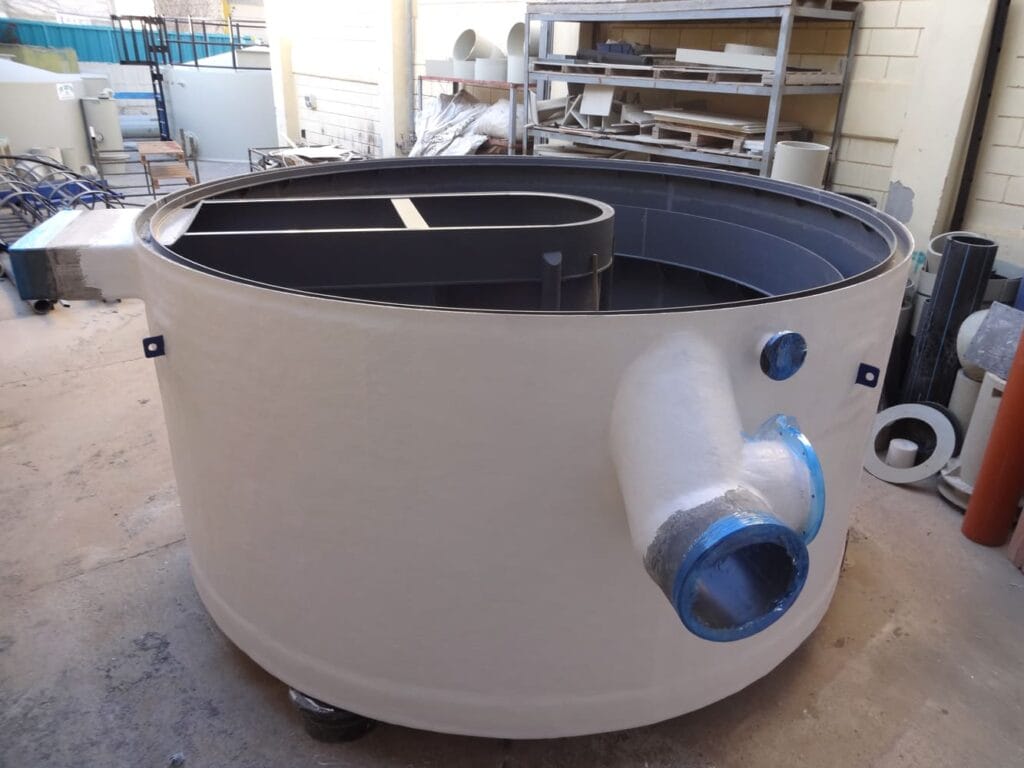
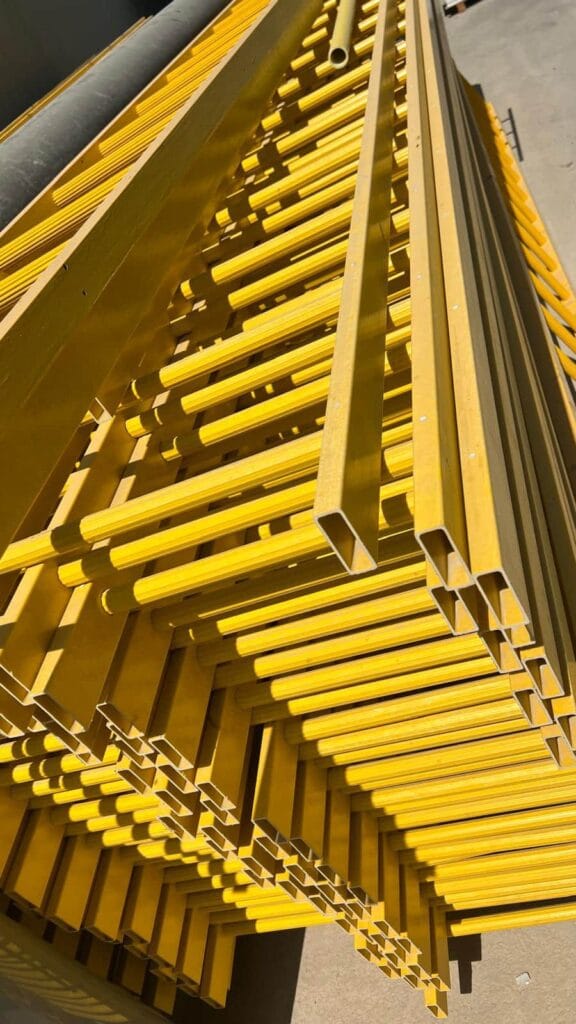
Sometimes, a combination of PVDF's chemical resistance with fiberglass (FRP) mechanical strength is required. PVDF/FRP composite tanks offer a solution to this challenge.
Dual structure: The tank consists of an inner PVDF layer (typically 2-3 mm) providing a chemical barrier, and an outer FRP layer providing mechanical strength and structural stability. Layers are connected through bonding or lamination.
Advantages: This combination provides PVDF's chemical resistance on the inside, along with FRP's mechanical strength on the outside. Large tanks up to 200,000 liters can be built, with pressure and vacuum resistance and long service life of 20-30 years.
Applications: Concentrated acid storage, metal coating processes (pickling, anodizing), process tanks in the chemical and pharmaceutical industry.
Processing and Welding
PVDF can be processed using standard thermoplastic methods:
Extrusion: Production of piping, profiles, and sheets. Material is fed into the extruder, heated to a melt, and pushed through the die.
Injection Molding: Production of complex parts such as pipe fittings, valve bodies and pumps.
Hot element welding: The common method for joining piping and tanks. Welding temperature: 240-270°C. Absolute cleanliness of welding surfaces is essential.
Extrusion welding: For complex joints and repairs. The PVDF welding rod is melted and flowed into the gap between the parts.
Electrofusion welding: For pipe connections. Fitting with a built-in heating element is connected to the pipe and electrically activated.
Solution processing: PVDF dissolves in polar solvents such as NMP, DMF, and hot acetone. This property enables the creation of thin coatings, membranes, and battery films.
Standards and Quality Control
PVDF tanks from Plast Hen are manufactured according to DVS 2205, the German standard for thermoplastic tank design and manufacture.
Every tank undergoes wall thickness measurement at multiple points, weld inspection (visual and mechanical), leak testing, and complete raw material and manufacturing process documentation.
Certifications: Tanks are available with FDA certification for food use, USP Class VI for medical applications, and NSF 61 for drinking water contact.